


-
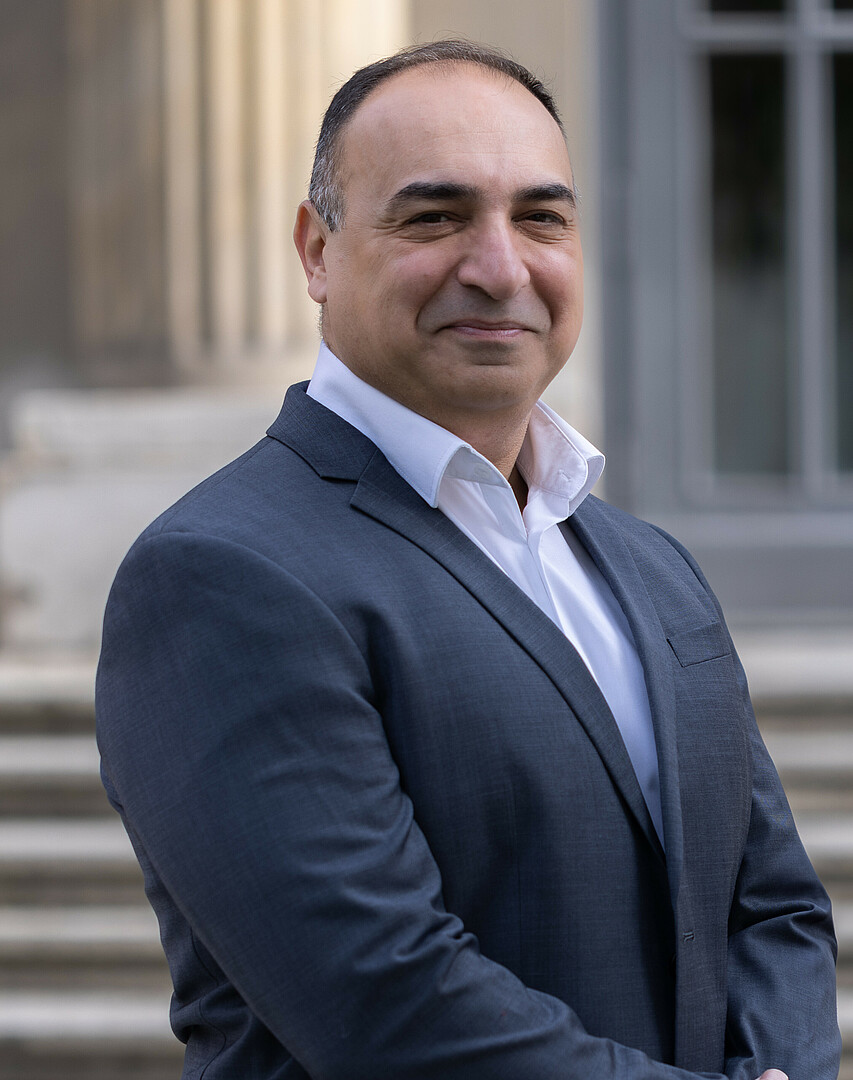
© Rami Shacour
09.06.2026Rami Shacour - Humboldt University Berlin

Rami Shacour moved to Berlin from Haifa in 2017 with his family and co-founders, drawn by the EXIST scholarship and the promise of one of Europe's most dynamic research ecosystems. Nearly a decade on, his company Innosphere is on the verge of a breakthrough that could change how ADHD is treated in children: with targeted electrical stimulation of the brain instead of medication.
Innosphere's work sits at the intersection of neuroscience, engineering, and medicine. The company's research focuses on translating validated scientific findings into a safe, non-invasive treatment for children with ADHD. The goal is to improve attention and cognitive function without the side effects commonly associated with pharmacological therapies. “I was especially drawn to the need for effective treatment alternatives that do not rely solely on medication,” says Shacour. “The idea that neuroscience and technology can work together to provide a non-invasive, safe, and evidence-based treatment approach is both scientifically exciting and personally motivating to me.”
The idea that neuroscience and technology can work together to provide a non-invasive, safe, and evidence-based treatment approach is both scientifically exciting and personally motivating to me.
The technology at the heart of Innosphere's approach is non-invasive electrical brain stimulation – a method of modulating neural activity through precisely targeted electrical signals. What draws Shacour to it is not only the scientific complexity, but the human stakes. “ADHD affects not only children, but also their families, confidence, academic performance, and social well-being,” he explains. “Helping children improve their focus, confidence, and quality of life, while also reducing stress and challenges for parents, is a highly meaningful goal.”
“Innosphere is not only exploring how non-invasive electrical brain stimulation can influence brain activity and attention regulation, but also translating these findings into a real treatment solution that can be accessible and beneficial in real-world settings,” says Shacour. For him, this bridge between cutting-edge science and practical application makes the work truly special, turning research into clinically reality.
The company is now preparing the next major stage of its clinical and regulatory journey. Following expected FDA clearance in the United States, its focus will turn to the European market. Central to this is a planned clinical trial in collaboration with Charité Universitätsmedizin Berlin to generate the data required for CE regulatory clearance across Germany and the European Union.
Berlin offers a unique research environment by bringing together leading international experts and one of the world's most renowned hospitals – Charité – in a single location.
This partnership in the Brain City Berlin is possible because of the city’s concentration of world-class institutions. “Berlin offers a unique research environment by bringing together leading international experts and one of the world's most renowned hospitals – Charité – in a single location”, Shacour says, underlining the enabling environment. Alongside Charité, Innosphere collaborates closely with Humboldt University, combining expertise across neuroscience, clinical research, and medical technology development in a way that is, as Shacour puts it, “highly interdisciplinary, bringing together researchers, clinicians, engineers, and entrepreneurs.”
His path to the Brain City Berlin began in Haifa, where Shacour and his co-founders were already developing the concept behind Innosphere. The EXIST scholarship brought them to Humboldt University and into Berlin's innovation ecosystem, which has shaped the company ever since. From the outset, they were supported by Berlin Partner, who helped navigate the practical and bureaucratic aspects of establishing and growing a company in Germany.
Berlin combines a high quality of life with a strong environment for research and business, enabling growth without compromising balance.
Berlin's appeal, Shacour says, goes well beyond its institutions. “Berlin combines a high quality of life with a strong environment for research and business, enabling growth without compromising balance.” For someone raising a family whilst building an international medtech company, that balance matters. “It allows me to continue developing impactful international projects like Innosphere's initiative while maintaining a healthy work-life balance, staying close to family, and raising my children in an open, diverse, and supportive environment.”
For scientists considering Berlin, Shacour's advice is straightforward: be proactive, and think beyond the laboratory. “Opportunities often come through collaboration and networking across different fields and cultures. Don't be afraid to reach out to universities, hospitals, incubators, and organisations like Berlin Partner. People here are generally very open to supporting innovative ideas and international talent.”
People here are generally very open to supporting innovative ideas and international talent.
He is equally clear about the longer view. “The real challenge is not only generating scientific results, but transforming them into solutions that can truly improve people's lives.” This challenge defines Innosphere's own trajectory that Berlin, with its rare combination of scientific depth, clinical infrastructure, and entrepreneurial openness, is particularly well suited to support.
For the future of Brain City Berlin, Shacour hopes to see the city continue strengthening the connections between research institutions, hospitals, startups, and regulatory frameworks, "so that groundbreaking medical technologies can move more efficiently from the laboratory into patient care.” If Innosphere's own journey is anything to go by, Berlin is already well on its way.
More ambassadors
-
Category botschafter
 © Mustafa Demirbuga
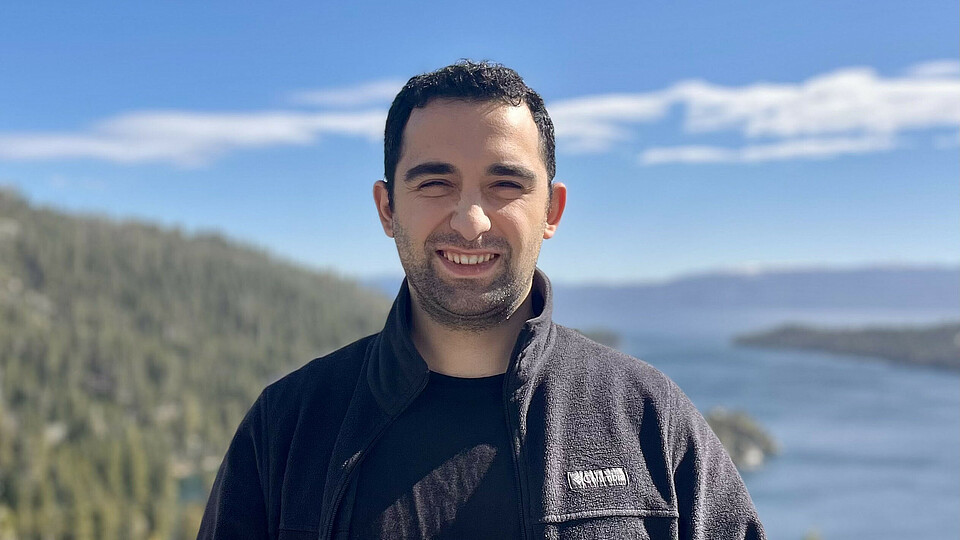
Category botschafterBerlin is a place where you can grow and flourish together.→
© Mustafa Demirbuga
Category botschafterBerlin is a place where you can grow and flourish together.→Mustafa Demirbuga
-
Category botschafter Charité - Universitätsmedizin Berlin
 © Charité Universitätsmedizin Berlin
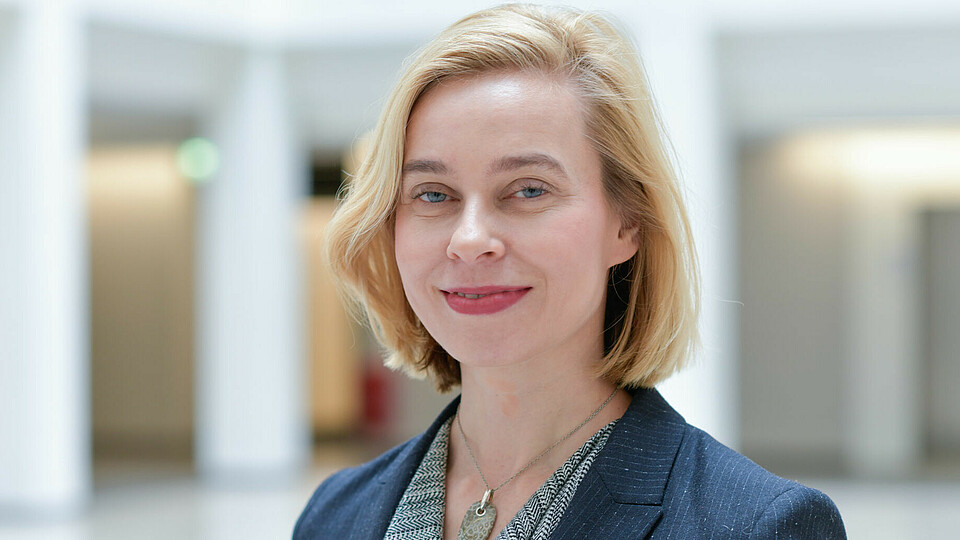
Category botschafter Charité - Universitätsmedizin BerlinThe neurosciences are extremely well established here. And Berlin is also a highly attractive city. It is easy to find excellent colleagues. That is…→
© Charité Universitätsmedizin Berlin
Category botschafter Charité - Universitätsmedizin BerlinThe neurosciences are extremely well established here. And Berlin is also a highly attractive city. It is easy to find excellent colleagues. That is…→Prof. Dr. Petra Ritter
-
Category botschafter Humboldt-Universität zu Berlin
 © Smita Singh
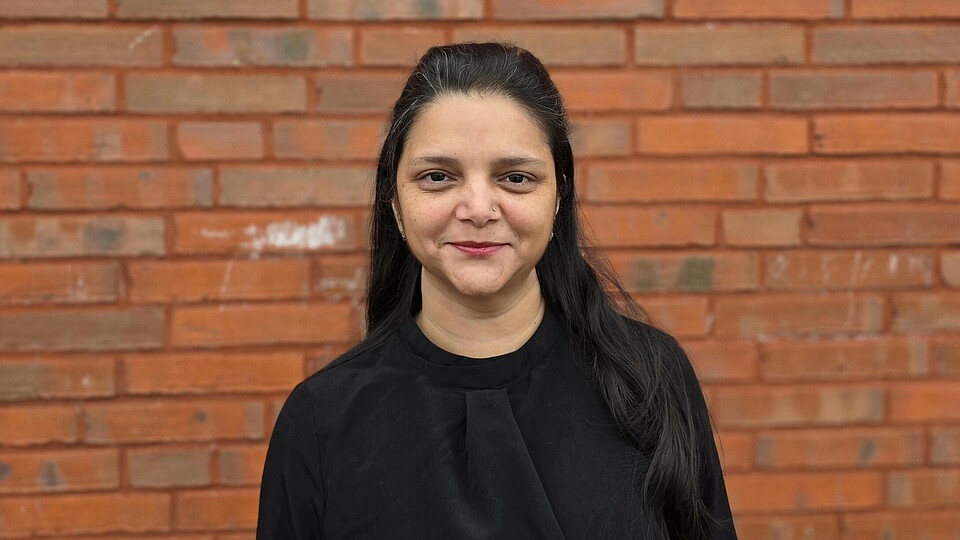
Category botschafter Humboldt-Universität zu BerlinBerlin does not ask you to fit in existing boxes. It gives you space to create your own.→
© Smita Singh
Category botschafter Humboldt-Universität zu BerlinBerlin does not ask you to fit in existing boxes. It gives you space to create your own.→Smita Singh
-
Category botschafter Technische Universität Berlin
 © Arne Sattler
Category botschafter Technische Universität BerlinBerlin offers many opportunities for exchange and collaboration. I find the close connection between TU Berlin and Charité – Universitätsmedizin…→
© Arne Sattler
Category botschafter Technische Universität BerlinBerlin offers many opportunities for exchange and collaboration. I find the close connection between TU Berlin and Charité – Universitätsmedizin…→Prof. Dr. Sina Bartfeld
-
Category botschafter Humboldt-Universität zu Berlin
 © Christian Ulrichs
Category botschafter Humboldt-Universität zu BerlinIt is important to me to take our research to the city. I find it particularly exciting when society actively participates in our research.→
© Christian Ulrichs
Category botschafter Humboldt-Universität zu BerlinIt is important to me to take our research to the city. I find it particularly exciting when society actively participates in our research.→Prof. Dr. Dr. Christian Ulrichs
-
Category botschafter Center for the Science of Materials Berlin
 © WISTA Management GmbH
Category botschafter Center for the Science of Materials BerlinBerlin is a global city. In science, there are designated experts for every topic. Berlin also has always been a seedbed for change: a special…→
© WISTA Management GmbH
Category botschafter Center for the Science of Materials BerlinBerlin is a global city. In science, there are designated experts for every topic. Berlin also has always been a seedbed for change: a special…→Prof. Dr. Stefan Hecht
-
Weizenbaum Institut Category botschafter
 © rbb
Weizenbaum Institut Category botschafterBerlin is a metropolitan area with many universities. There’s a good chance of finding people here who are like-minded and with whom you can get…→
© rbb
Weizenbaum Institut Category botschafterBerlin is a metropolitan area with many universities. There’s a good chance of finding people here who are like-minded and with whom you can get…→Prof. Dr. Sascha Friesike
-
Category botschafter Technische Universität Berlin
 © Christian Kielmann
Category botschafter Technische Universität BerlinBerlin harbours incredible potential and allows for experimentation – it’s a breeding ground for innovation.→
© Christian Kielmann
Category botschafter Technische Universität BerlinBerlin harbours incredible potential and allows for experimentation – it’s a breeding ground for innovation.→Prof. Dr. Søren Salomo
-
Category botschafter ICN Business School
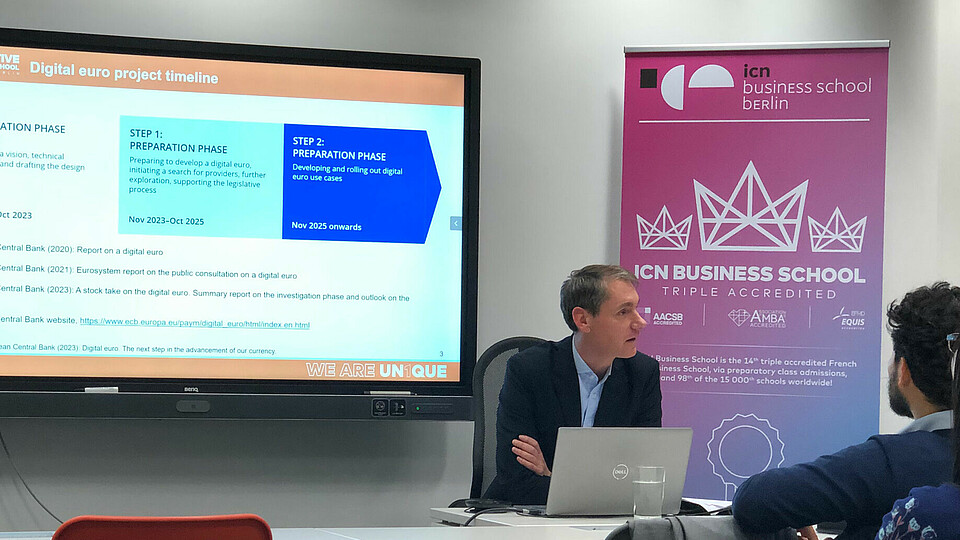 © Jessica Seiler
Category botschafter ICN Business SchoolBerlin impresses with its excellent infrastructure. It’s easy to network within the academic community here.→
© Jessica Seiler
Category botschafter ICN Business SchoolBerlin impresses with its excellent infrastructure. It’s easy to network within the academic community here.→Prof. Dr. rer. pol. Volker Seiler
-
Category botschafter Charité - Universitätsmedizin Berlin
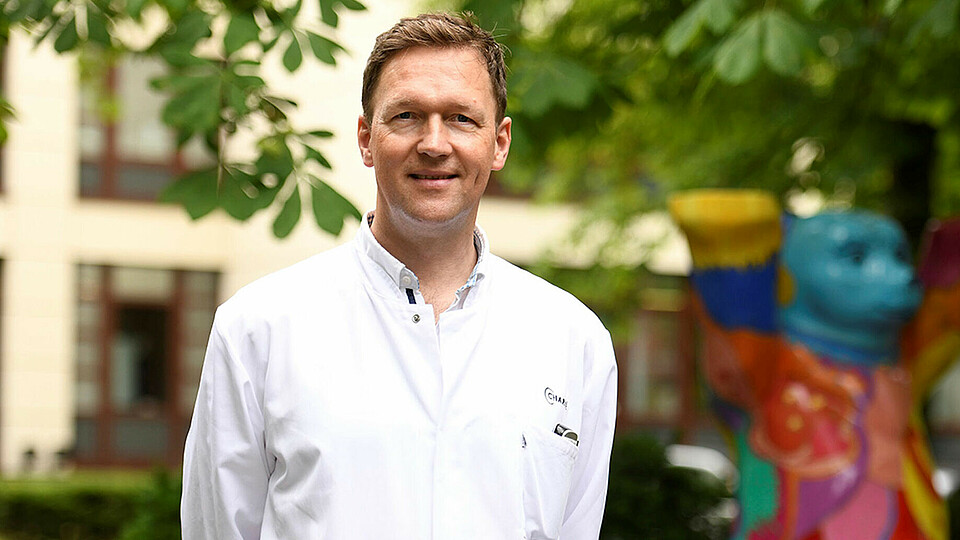 © Iris Janke
Category botschafter Charité - Universitätsmedizin BerlinBerlin offers a large number of universities, colleges and institutions that enable cooperation in many sectors.→
© Iris Janke
Category botschafter Charité - Universitätsmedizin BerlinBerlin offers a large number of universities, colleges and institutions that enable cooperation in many sectors.→Prof. Dr. med. Ulrich-Wilhelm Thomale
-
Category botschafter Charité - Universitätsmedizin Berlin
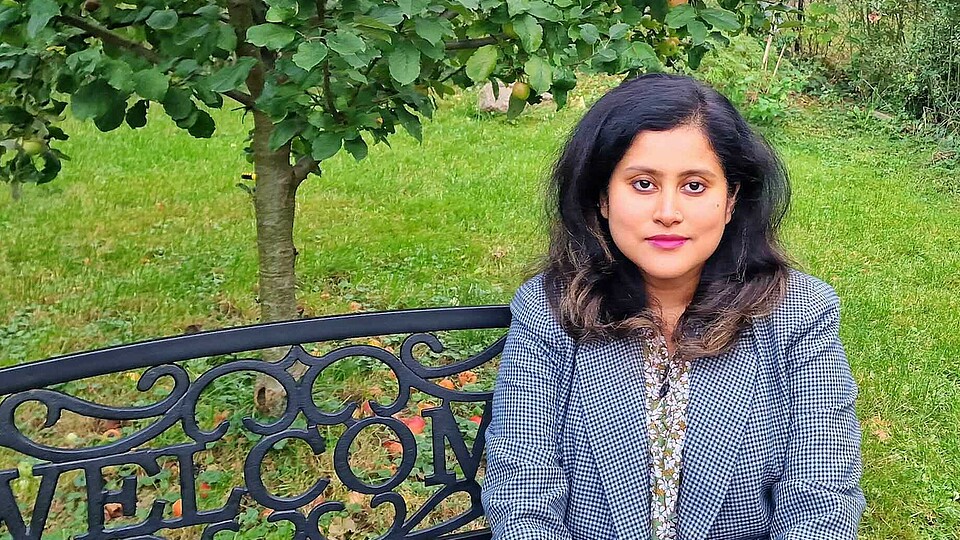 Category botschafter Charité - Universitätsmedizin BerlinThere is hardly another city that offers so many facets – science, technology, art, music and history.→
Dr. rer. nat. Priyanka Banerjee
-
Category botschafter Alice Salomon Hochschule Berlin
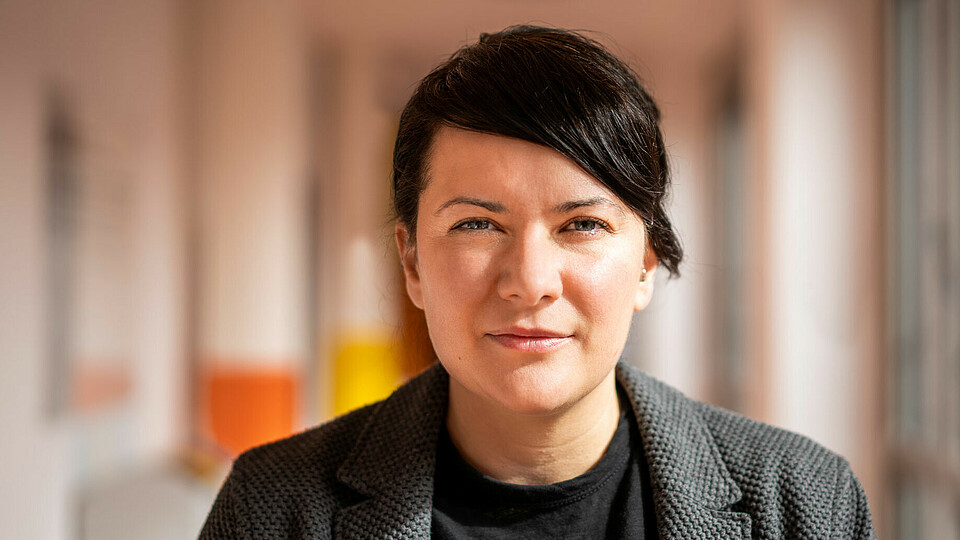 © Michael Schaaf
Category botschafter Alice Salomon Hochschule BerlinVery good networking, proximity to political processes, great teams, short distances to the office, an innovative environment and great diversity –…→
© Michael Schaaf
Category botschafter Alice Salomon Hochschule BerlinVery good networking, proximity to political processes, great teams, short distances to the office, an innovative environment and great diversity –…→Prof. Dr. Dr. Hürrem Tezcan-Güntekin
-
Category botschafter Freie Universität Berlin
 © David Ausserhofer
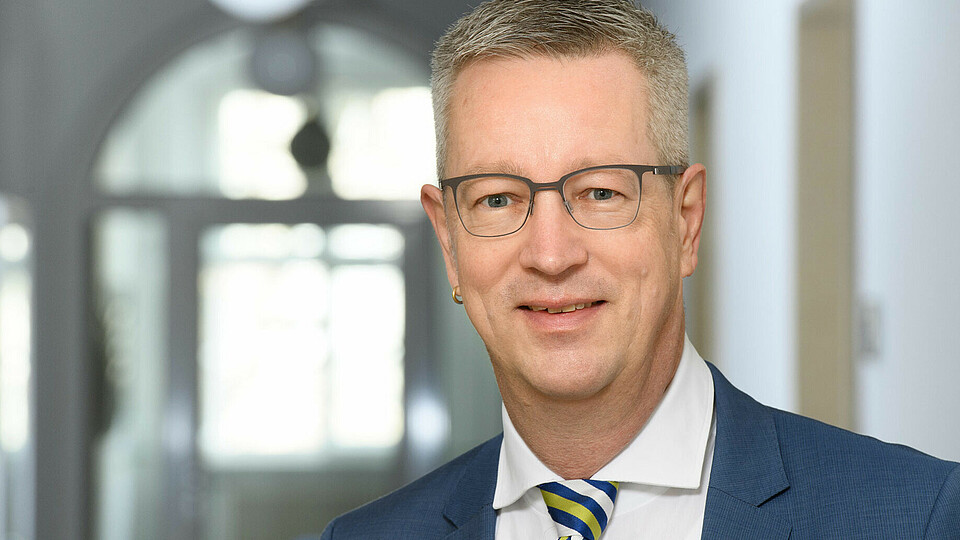
Category botschafter Freie Universität BerlinWith the Berlin University Alliance, the universities and many other higher education and research institutions, Berlin as a centre of science is a…→
© David Ausserhofer
Category botschafter Freie Universität BerlinWith the Berlin University Alliance, the universities and many other higher education and research institutions, Berlin as a centre of science is a…→Prof. Günter M. Ziegler
-
Category botschafter Weierstrass Institute
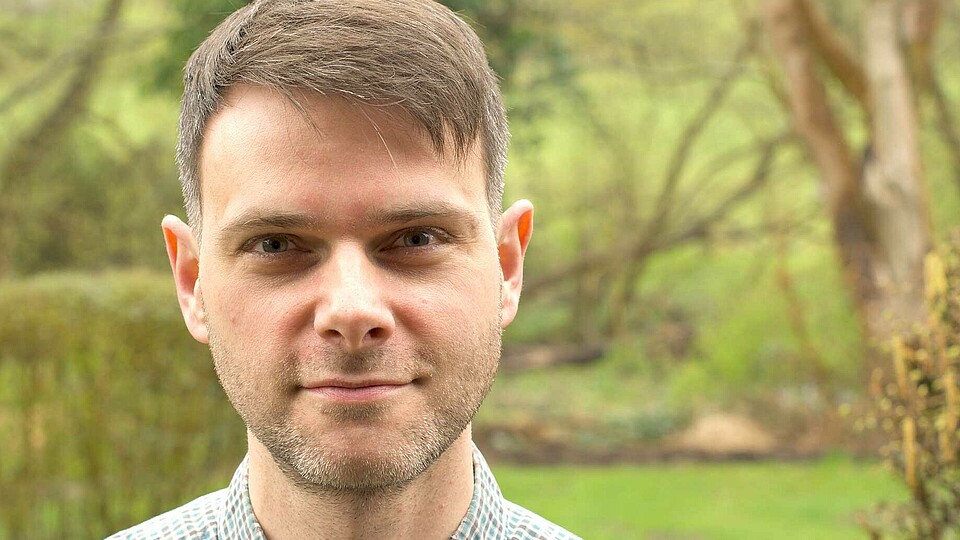 Category botschafter Weierstrass InstituteIn Berlin there are several excellent mathematics institutions and a wealth of interesting areas to apply mathematics.→
Dr. Patricio Farrell
-
Category botschafter BG Klinikum Unfallkrankenhaus Berlin
 © Dorothea Scheurlen DGPh, ukb
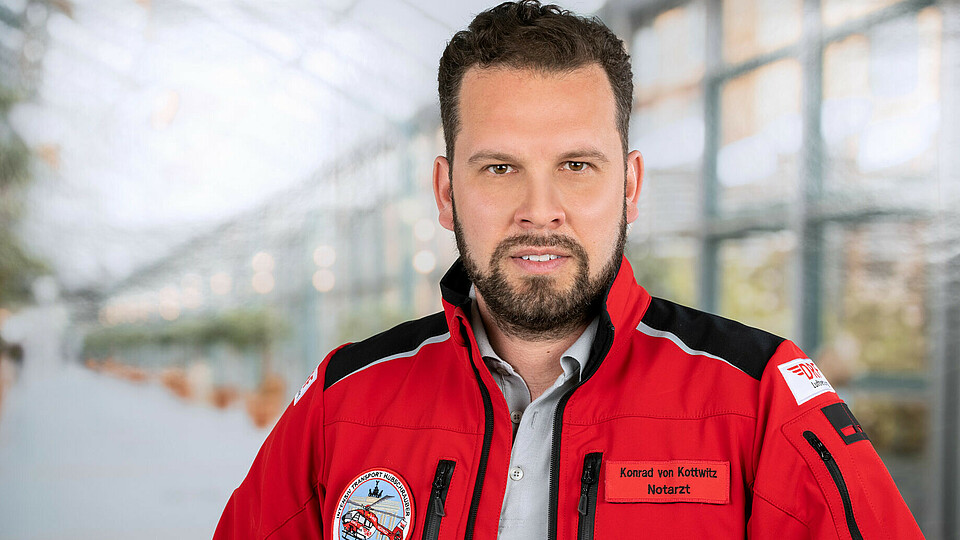
Category botschafter BG Klinikum Unfallkrankenhaus BerlinBerlin is now at the forefront of emergency medical care. Pragmatic approaches are being developed into standards through model projects and are…→
© Dorothea Scheurlen DGPh, ukb
Category botschafter BG Klinikum Unfallkrankenhaus BerlinBerlin is now at the forefront of emergency medical care. Pragmatic approaches are being developed into standards through model projects and are…→Konrad von Kottwitz
-
Category botschafter Katholische Hochschule für Sozialwesen Berlin (KHSB Berlin)
 © Nicola Sernow
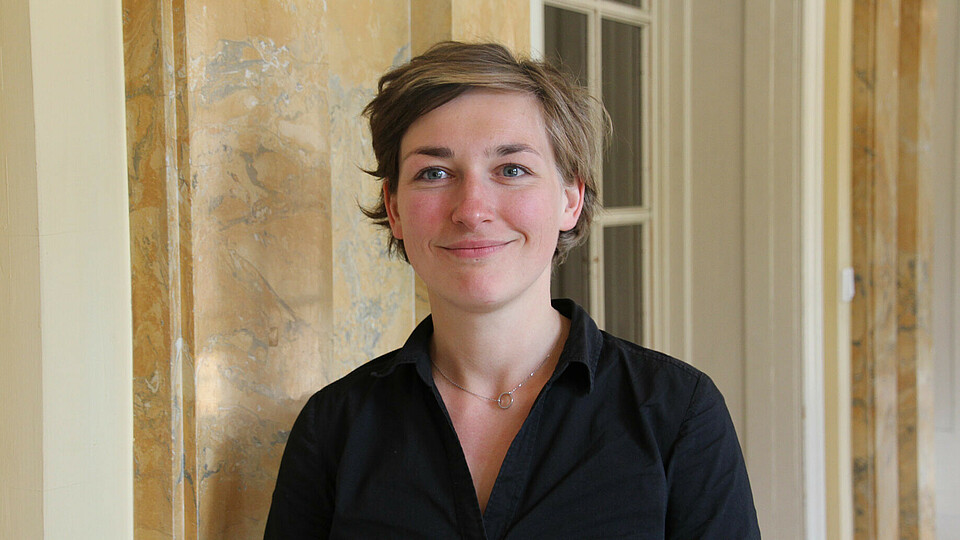
Category botschafter Katholische Hochschule für Sozialwesen Berlin (KHSB Berlin)The diversity of Berlin offers a lot of scientific potential: Practical and committed people come together here and develop and try out new things.→
© Nicola Sernow
Category botschafter Katholische Hochschule für Sozialwesen Berlin (KHSB Berlin)The diversity of Berlin offers a lot of scientific potential: Practical and committed people come together here and develop and try out new things.→Prof. Dr. Sarah Häseler
-
Category botschafter Evangelische Hochschule Berlin
 © Nils Bornemann
Category botschafter Evangelische Hochschule BerlinBerlin’s strength lies in the networking of the individual educational institutes and in the fact that not every institution has to reinvent the…→
© Nils Bornemann
Category botschafter Evangelische Hochschule BerlinBerlin’s strength lies in the networking of the individual educational institutes and in the fact that not every institution has to reinvent the…→Prof. Dr. Mandy Mangler
-
Category botschafter Humboldt-Universität zu Berlin
 © Wael Yakti
Category botschafter Humboldt-Universität zu BerlinBerlin offers almost unlimited opportunities for cooperation, many cultural events and a colourful social life.→
© Wael Yakti
Category botschafter Humboldt-Universität zu BerlinBerlin offers almost unlimited opportunities for cooperation, many cultural events and a colourful social life.→Dr. Wael Yakti
-
Category botschafter
 Category botschafterInternational connectivity, creative exchange, specialists in many exciting niches: Berlin is a nucleus for innovation, a living tree of knowledge and…→
Prof. Dr. Peter Konhäusner
-
Category botschafter Deutsches Zentrum für Luft- und Raumfahrt
 © Berlin Partner/gretchen
Category botschafter Deutsches Zentrum für Luft- und RaumfahrtBerlin can play an important pioneering role for the mobility transition in Germany and has already achieved a great deal along the way.→
© Berlin Partner/gretchen
Category botschafter Deutsches Zentrum für Luft- und RaumfahrtBerlin can play an important pioneering role for the mobility transition in Germany and has already achieved a great deal along the way.→Prof. Dr. Meike Jipp
-
Category botschafter Technische Universität Berlin
 © Magnus Reed
Category botschafter Technische Universität BerlinBerlin is a lively city where non-academics who are outside the establishment can express themselves→
© Magnus Reed
Category botschafter Technische Universität BerlinBerlin is a lively city where non-academics who are outside the establishment can express themselves→Brain City Ambassador Jess de Jesus de Pinho Pinhal
-
Category botschafter Mercator Research Institute on Global Commons and Climate Change
 Photo: MCC Berlin © Matti Hillig
Category botschafter Mercator Research Institute on Global Commons and Climate ChangeThere is no expertise that is not available in Berlin. For me, this is a decisive advantage of the location.→
Photo: MCC Berlin © Matti Hillig
Category botschafter Mercator Research Institute on Global Commons and Climate ChangeThere is no expertise that is not available in Berlin. For me, this is a decisive advantage of the location.→Brain City Ambassador Prof. Dr. Felix Creutzig
-
Category botschafter Ferdinand-Braun-Institut
 Photo: Dr Markus Krutzik
Category botschafter Ferdinand-Braun-InstitutIn Berlin there are universities and research institutes with high international visibility – especially in areas related to optics and photonics.→
Photo: Dr Markus Krutzik
Category botschafter Ferdinand-Braun-InstitutIn Berlin there are universities and research institutes with high international visibility – especially in areas related to optics and photonics.→Brain City Ambassador Dr. Markus Krutzik
-
Category botschafter Hochschule für Technik und Wirtschaft Berlin (HTW Berlin)
 private
Category botschafter Hochschule für Technik und Wirtschaft Berlin (HTW Berlin)Research in Berlin is research into contrasts. There are few cities that are closer to the zeitgeist.→
private
Category botschafter Hochschule für Technik und Wirtschaft Berlin (HTW Berlin)Research in Berlin is research into contrasts. There are few cities that are closer to the zeitgeist.→Prof Dr Kai Reinhardt
-
Category botschafter Labor Berlin - Charité Vivantes
 ©Christopher Hardt
Category botschafter Labor Berlin - Charité VivantesIn Berlin, you can find an excellent mix of small and medium-sized research companies, as well as large firms, scientific institutes, universities and…→
©Christopher Hardt
Category botschafter Labor Berlin - Charité VivantesIn Berlin, you can find an excellent mix of small and medium-sized research companies, as well as large firms, scientific institutes, universities and…→Christopher Hardt
-
Category botschafter Technische Universität Berlin
![[Translate to English:]](/fileadmin/_processed_/b/c/csm_Lang_Berlin-Partner_Philipp-Jester_683x384_31db623bc3.jpg "[Translate to English:]") [Translate to English:]
Category botschafter Technische Universität BerlinThis is what makes Berlin so unique for me as an entrepreneur: I can call upon scientific expertise for any issue that may arise.→
[Translate to English:]
Category botschafter Technische Universität BerlinThis is what makes Berlin so unique for me as an entrepreneur: I can call upon scientific expertise for any issue that may arise.→Prof. Dr. Christine Lang