


-
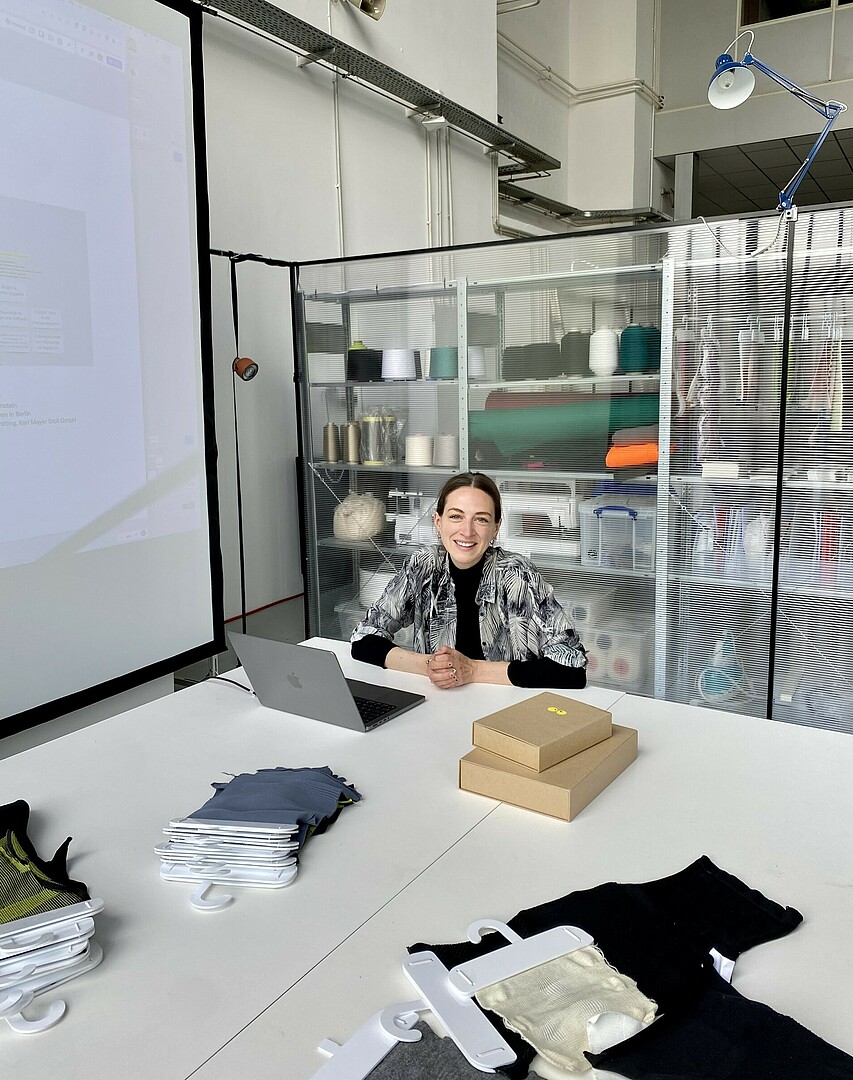
© Essi Glomb / Weißensee Kunsthochschule Berlin
24.07.2026Design meets technology: Hannah Friederike Fischer from DFKI Berlin in interview

What happens when a designer starts thinking about artificial intelligence? In the case of Hannah Friederike Fischer, the answer is a smart pair of trousers that helps children with gait disorders experience their physiotherapy as a video game. Fischer is a product designer and research associate at the German Research Center for Artificial Intelligence (DFKI) in Brain City Berlin, in the Design Research Explorations department led by Prof. Dr. Gesche Joost.
From fashion design to wearable computing
Her path into research was anything but straightforward, and that is precisely what shapes her work. Fischer first studied art and media studies, then fashion design at the Berlin University of the Arts, before completing a Master's in product design at FH Potsdam. Today her research sits at the intersection of design research, human-computer interaction and material design.
"I have always enjoyed connecting different disciplines," she says. "I understand design not just as the creation of products, but as a research process." In her work, she combines participatory methods, co-design processes and prototyping to develop solutions together with users that are both functional and compelling in their design.
The smart trousers: a practical example
A concrete example of this approach is the Space Explorer project (TexaS). Fischer and her team worked together with children with gait disorders, their parents, physiotherapists and other experts to develop a smart pair of trousers for children and young people. Sensors in the trousers detect movements such as steps, squats and kicks and translate them into a playful space world controlled by an avatar. "This means physiotherapy exercises are experienced not just as a therapeutic task, but as an interactive experience that can foster motivation and independence," explains Fischer.
A key question throughout was accessibility: how does a wearable need to be designed so that people with limited mobility can use it independently? The project is a good illustration of how design, technology and medicine can come together to enable new forms of participation in everyday life.
Human-centred technology at DFKI
What Fischer values most about DFKI is its interdisciplinarity. The institute works in research consortia with universities, clinics, companies and other research institutions, bringing very different perspectives into contact. In her Design Research Explorations department, the central question is not: what is technically possible? But rather: what do people actually need? "It is not the technology that is at the centre, but the people who use it," says Fischer. "For me, that is exactly what human-centred technology means."
Project-based research also means regularly immersing herself in entirely new subject areas, sometimes within a matter of weeks. "That makes the work incredibly varied," she says. "And in the end it is very meaningful work. When we develop technologies that support people in their everyday lives, design becomes a tool for me to translate research into real social impact."
Fischer sees an important connection here to the deep tech focus that is central to Brain City Berlin. Her work is concerned with the interface between complex technologies and their usability in everyday life. Her question is: "How can technological possibilities give rise to applications that are comprehensible, accessible and genuinely useful for people?"
Why Berlin?
The fact that Fischer conducts her research in Brain City Berlin is no coincidence. "Berlin brings together people from the most diverse disciplines and countries. In research especially, this gives rise to incredibly exciting collaborations, because different perspectives meet as a matter of course." She also values the city's cultural life, its openness and the ability to cycle to work. "Despite all the hustle, the city has a certain ease," says Fischer, which creates a unique blend of dynamism and calm.
For researchers considering a move to Berlin, she has clear advice: "Network early. Berlin offers an incredible range of opportunities, but you have to actively use them. And explore the city with curiosity: if you move through the city with open eyes, you often find exactly the people, projects or places that give your own work new impetus."
More information:
- https://www.drlab.org
- https://www.dfki.de/web/forschung/forschungsbereiche/design-research-explorations
- Hannah Fischer
Disclaimer: Hannah Fischer has not been working at DFKI since spring 2026. This interview was conducted while she was still employed there.
More Stories
-
Startup Facts & Events Innovations
 © HU Berlin / Stefan Klenke
Startup Facts & Events InnovationsThe Berlin Battery Lab: Research into sodium-ion batteries.→
© HU Berlin / Stefan Klenke
Startup Facts & Events InnovationsThe Berlin Battery Lab: Research into sodium-ion batteries.→The Berlin Battery Lab: Research into sodium-ion batteries
-
Talent Facts & Events Transfer – Stories
 © Natalia Slepenko via idw
Talent Facts & Events Transfer – StoriesResearching together, thinking together: Berlin institutions join forces in materials research.→
© Natalia Slepenko via idw
Talent Facts & Events Transfer – StoriesResearching together, thinking together: Berlin institutions join forces in materials research.→Researching together, thinking together: Berlin institutions join forces in materials research
-
Facts & Events Transfer – Stories Innovations
 © Mikhail Rudenko
Facts & Events Transfer – Stories InnovationsBerlin research moves closer to the diamond-based quantum internet.→
© Mikhail Rudenko
Facts & Events Transfer – Stories InnovationsBerlin research moves closer to the diamond-based quantum internet.→Berlin research moves closer to the diamond-based quantum internet
-
Transfer – Stories Innovations
 © Michael Radke, Max Delbrück Center
Transfer – Stories InnovationsHidden switch in the heart: Berlin research opens new avenues against heart disease.→
© Michael Radke, Max Delbrück Center
Transfer – Stories InnovationsHidden switch in the heart: Berlin research opens new avenues against heart disease.→Hidden switch in the heart: Berlin research opens new avenues against heart disease
-
Talent Transfer – Stories
 © Sylke Schumann, HWR Berlin
Talent Transfer – StoriesMaking ideas visible: The Student EXPO Berlin 2027 at HWR.→
© Sylke Schumann, HWR Berlin
Talent Transfer – StoriesMaking ideas visible: The Student EXPO Berlin 2027 at HWR.→Making ideas visible: The Student EXPO Berlin 2027 at HWR
-
Facts & Events Innovations
 © Qui Nguyen via Unsplash
Facts & Events InnovationsCorals under pressure: Charité researches the resilience of reefs.→
© Qui Nguyen via Unsplash
Facts & Events InnovationsCorals under pressure: Charité researches the resilience of reefs.→Corals under pressure: Charité researches the resilience of reefs
-
Transfer – Stories Innovations
 Transfer – Stories InnovationsBerlin gives deep tech a strategy: The Deep Tech Berlin Agenda has been adopted.→
Berlin gives deep tech a strategy: The Deep Tech Berlin Agenda has been adopted
-
Talent Innovations
 Talent InnovationsFalling Walls Lab 2026: Apply now and come to Berlin.→
Falling Walls Lab 2026: Apply now and come to Berlin
-
Transfer – Stories Innovations
 © PTB | Stephanie Rubrecht
Transfer – Stories InnovationsEarlier detection of mental illness: the Einstein Center for Youth Mental Health gets under way.→
© PTB | Stephanie Rubrecht
Transfer – Stories InnovationsEarlier detection of mental illness: the Einstein Center for Youth Mental Health gets under way.→Earlier detection of mental illness: the Einstein Center for Youth Mental Health gets under way
-
Talent Facts & Events
 © M. Gasch
Talent Facts & EventsBerlin State Teaching Prize: a spotlight on excellent university teaching.→
© M. Gasch
Talent Facts & EventsBerlin State Teaching Prize: a spotlight on excellent university teaching.→Berlin State Teaching Prize: a spotlight on excellent university teaching
-
Innovations
 © Pexels / Tara Winstead
InnovationsWhy does performance fluctuate so dramatically in ADHD? A Berlin researcher has a new answer.→
© Pexels / Tara Winstead
InnovationsWhy does performance fluctuate so dramatically in ADHD? A Berlin researcher has a new answer.→Why does performance fluctuate so dramatically in ADHD? A Berlin researcher has a new answer
-
Startup Innovations
 © TECC-Connect / SOLYCO
Startup InnovationsDeep tech startup SOLYCO TECC is making the solar industry cleaner.→
© TECC-Connect / SOLYCO
Startup InnovationsDeep tech startup SOLYCO TECC is making the solar industry cleaner.→Deep tech startup SOLYCO TECC is making the solar industry cleaner
-
Facts & Events Innovations
 © Berlin Partner
Facts & Events InnovationsThe finalists for the Deep Tech Award 2026 have been announced.→
© Berlin Partner
Facts & Events InnovationsThe finalists for the Deep Tech Award 2026 have been announced.→The finalists for the Deep Tech Award 2026 have been announced
-
Talent Facts & Events Transfer – Stories
 © Ilona Buchem
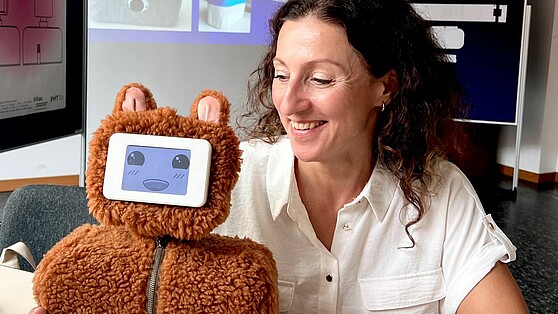
Talent Facts & Events Transfer – StoriesA social robot to help reduce stress: NEFFY 2.0 from Brain City Berlin→
© Ilona Buchem
Talent Facts & Events Transfer – StoriesA social robot to help reduce stress: NEFFY 2.0 from Brain City Berlin→A social robot to help reduce stress: NEFFY 2.0 from Brain City Berlin
-
Facts & Events Innovations
 © Freie Universität Berlin / Janet Wagner
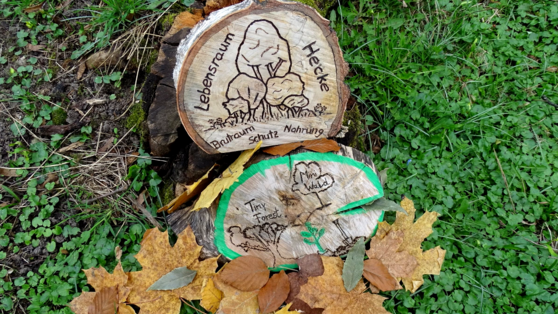
Facts & Events InnovationsLiving Forest Laboratories in Berlin: It's Growing!→
© Freie Universität Berlin / Janet Wagner
Facts & Events InnovationsLiving Forest Laboratories in Berlin: It's Growing!→Living Forest Laboratories in Berlin: It's Growing!
-
Talent Facts & Events
 © WISTA Management GmbH
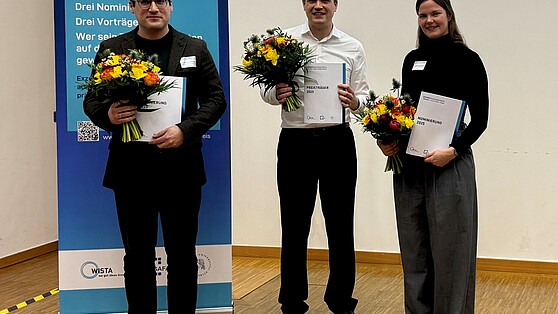
Talent Facts & EventsAdlershof Dissertation Award 2025 goes to early-career researcher Dr Sascha Robert Gaudlitz.→
© WISTA Management GmbH
Talent Facts & EventsAdlershof Dissertation Award 2025 goes to early-career researcher Dr Sascha Robert Gaudlitz.→Adlershof Dissertation Award 2025 goes to early-career researcher Dr Sascha Robert Gaudlitz
-
Insights Innovations
 © Berlin Institute for Innovation
Insights Innovations“Innovation = Invention + Market Penetration” is the working formula of the Berlin Institute for Innovation. The team takes a scientifically sound…→
© Berlin Institute for Innovation
Insights Innovations“Innovation = Invention + Market Penetration” is the working formula of the Berlin Institute for Innovation. The team takes a scientifically sound…→The Research Manufactory
-
Insights Transfer – Stories Innovations
 © Berlin Partner
Insights Transfer – Stories InnovationsQuantum technology is considered to be the next big technological leap. The Brain City Berlin offers ideal conditions for this.→
© Berlin Partner
Insights Transfer – Stories InnovationsQuantum technology is considered to be the next big technological leap. The Brain City Berlin offers ideal conditions for this.→BERLIN QUANTUM: a new initiative for quantum technologies
-
Facts & Events Innovations
 © Brand, Gao, Hamann, Martineck, Stangl/Charité
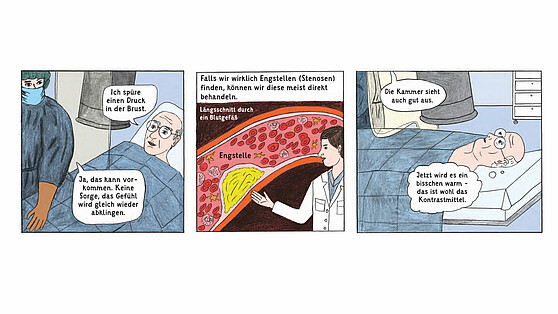
Facts & Events InnovationsThe Charité-Universitätsmedizin Berlin wants to inform patients with a comic before a heart catheter examination. As part of a study, the…→
© Brand, Gao, Hamann, Martineck, Stangl/Charité
Facts & Events InnovationsThe Charité-Universitätsmedizin Berlin wants to inform patients with a comic before a heart catheter examination. As part of a study, the…→A picture is worth a thousand words
-
Talent
 ©Jordan Katz
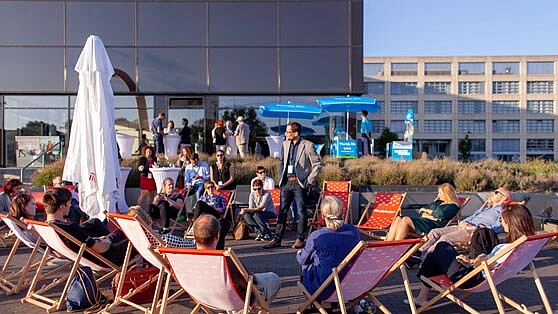
TalentAt the Brain City Summer Festival on 19 August, to which the now two-year-old campaign had invited together with the HTW Berlin University of Applied…→
©Jordan Katz
TalentAt the Brain City Summer Festival on 19 August, to which the now two-year-old campaign had invited together with the HTW Berlin University of Applied…→Participate, network, develop visions for the future - the Brain City Berlin Summer Festival | 03.09.2019
-
Innovations
![[Translate to English:]](/fileadmin/_processed_/d/4/csm_shutterstock_jacob_lund_588x314_75e5e9bf67.jpg "[Translate to English:] Shutterstock/ Jacob Lund") [Translate to English:] Shutterstock/ Jacob Lund
InnovationsThe capital city fills almost half of the professorships with female scientists: 48 percent of the calls for professorships made by Berlin…→
[Translate to English:] Shutterstock/ Jacob Lund
InnovationsThe capital city fills almost half of the professorships with female scientists: 48 percent of the calls for professorships made by Berlin…→Brain City Berlin – pioneering in equality issues | 10.07.2019
-
Talent
![[Translate to English:]](/fileadmin/_processed_/4/7/csm_Falls_Walls_Lab_Tunse_S_Amaira_Pyka_558x314_1577f1b171.jpg "[Translate to English:] Dr. Sana Amairi Pyka | Falling Walls Lab Tunis") [Translate to English:] Dr. Sana Amairi Pyka | Falling Walls Lab Tunis
TalentBrain City Berlin interviewed Dr. Sana Amairi Pyka, who hosted the first Falling Walls Lab in Tunis. The winner will participate at the Falling Walls…→
[Translate to English:] Dr. Sana Amairi Pyka | Falling Walls Lab Tunis
TalentBrain City Berlin interviewed Dr. Sana Amairi Pyka, who hosted the first Falling Walls Lab in Tunis. The winner will participate at the Falling Walls…→Brain City Ambassador organizes Falling Walls Lab in Tunis | 07.11.2018
-
Talent
![[Translate to English:]](/fileadmin/_processed_/3/0/csm_TU_Berlin_Dahl_Bibiothek_558x314_cf498032bd.jpg "[Translate to English:] TU Berlin | U. Dahl") [Translate to English:] TU Berlin | U. Dahl
TalentThe International Post-Doc Initiative of the Technische Universität Berlin is aimed at female scientists from all over the world. As part of the TU…→
[Translate to English:] TU Berlin | U. Dahl
TalentThe International Post-Doc Initiative of the Technische Universität Berlin is aimed at female scientists from all over the world. As part of the TU…→IPODI – TU Berlin funds international female scientists | 14.05.2018