


-
© Martin Weinhold
28.10.2026When construction materials grow organically: Building with fungi

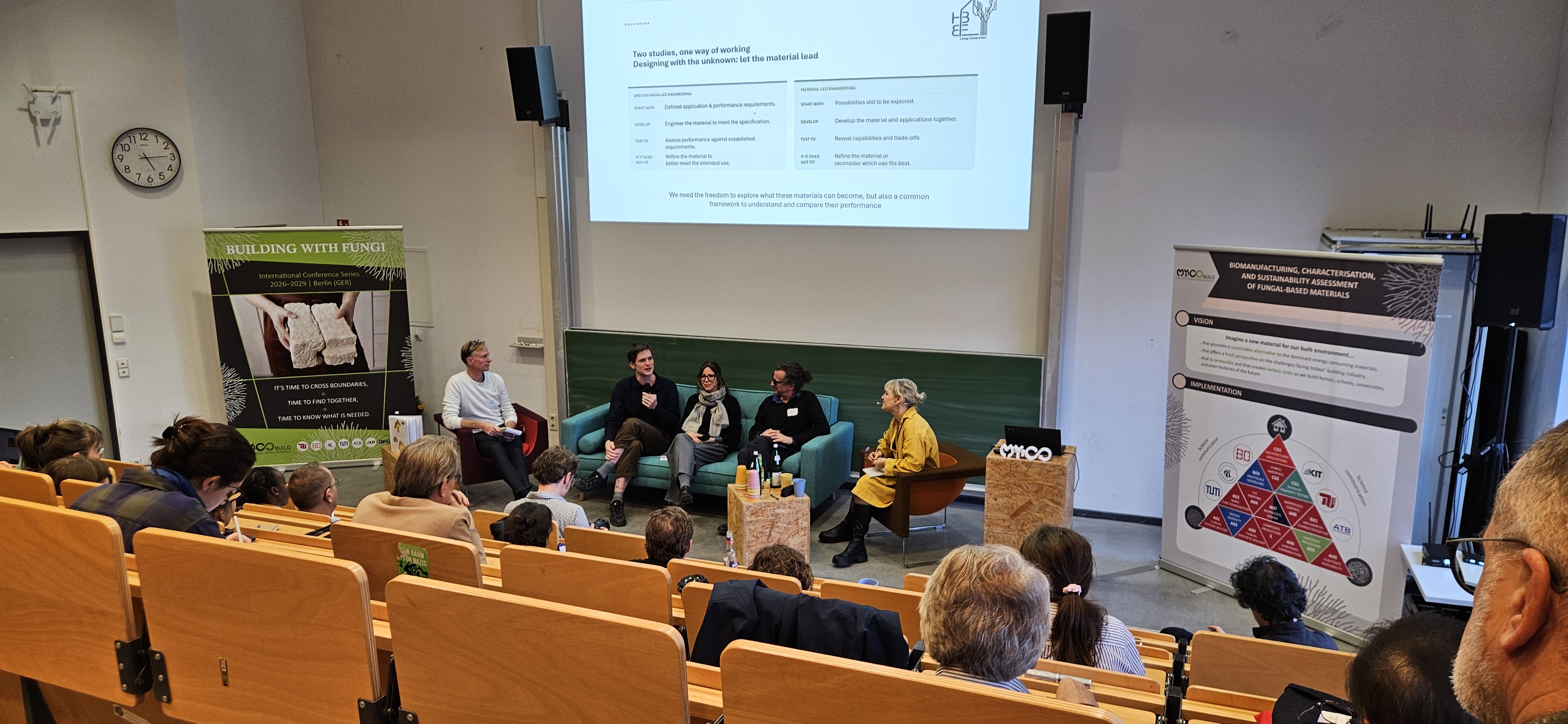
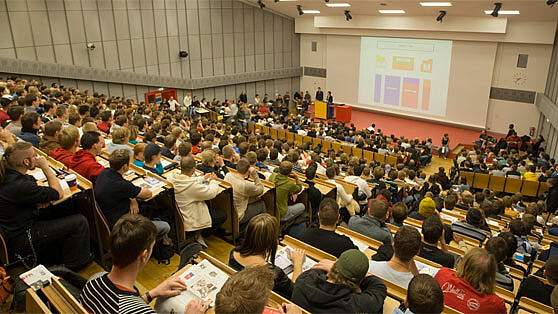
Houses made of fungi? What sounds like science fiction is the subject of intensive research at the Technical University of Berlin. From October 13 to 16, 2026, researchers from the fields of biotechnology, architecture, materials research, design, and art came to Brain City Berlin for the international conference "Building with Fungi." Their shared question: How resilient are building materials made from fungi, and how can they be produced at scale?
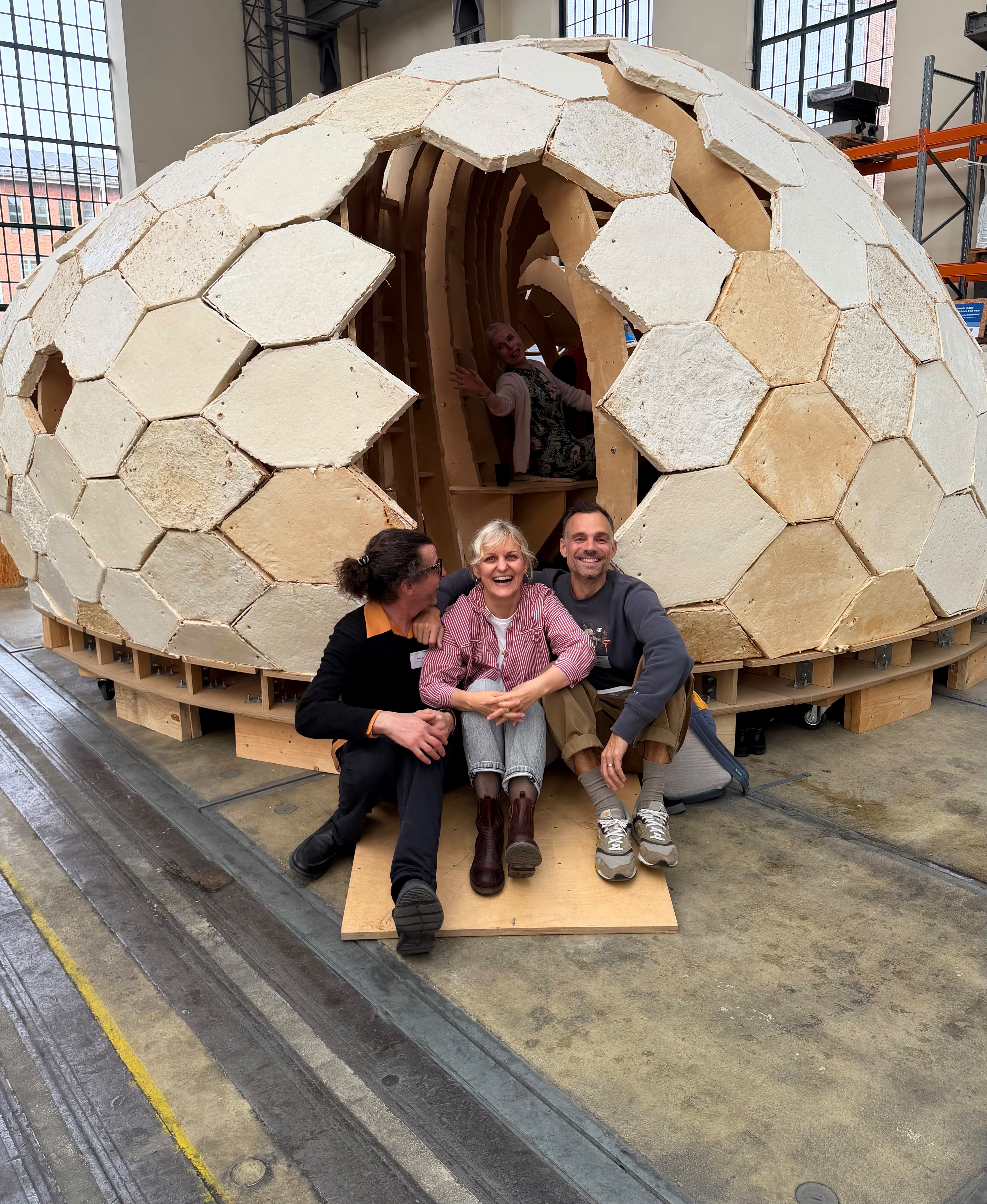
The basis of these new materials is mycelium, the fine, branching network through which fungi grow in soil or in wood. When fungi are given plant residues such as hemp shives or wood chips, they grow through the material and bind it into a solid composite. At the end, the fungus is killed by heat. What remains is a lightweight material that can be used, for example, as insulation, as a building component, or in combination with other materials.
Several projects at the conference showed what this can look like in practice. In Namibia, the team from MycoHab first grew edible mushrooms from an invasive bush that overruns large grazing areas there, then pressed the colonized substrate into building blocks. This produced a building in Windhoek that, according to the team, is supported entirely by fungal blocks. In 2025, US artist Sam Shoemaker paddled roughly 42 kilometers across the Pacific off Los Angeles in a boat made of fungal material.
Still many open questions
Before fungal materials arrive on German construction sites, however, there is still a long way to go, and this was openly discussed in Berlin as well. Engineer and chemist Mitchell P. Jones of TU Wien pointed out that the strength, durability, and thermal insulation of many fungal materials still lag behind conventional building materials, and that production is often slow and difficult to automate. The ecological benefit, too, must be demonstrated on a case-by-case basis. Numerous projects presented at the conference are working on such questions: from which fungal species suit which applications, to 3D printing with living mycelium, to using reclaimed wood and leftover bread as a growing medium.
Architect Prof. Eike Roswag-Klinge, vice president of TU Berlin and president of the Berlin Chamber of Architects, made clear why the search is worthwhile. Construction causes high greenhouse gas emissions and large raw material consumption: according to him, 92 percent of the mineral raw materials extracted in Germany are used for buildings and infrastructure. Renewable materials could make a contribution here.
Research between the lab, architecture, and art
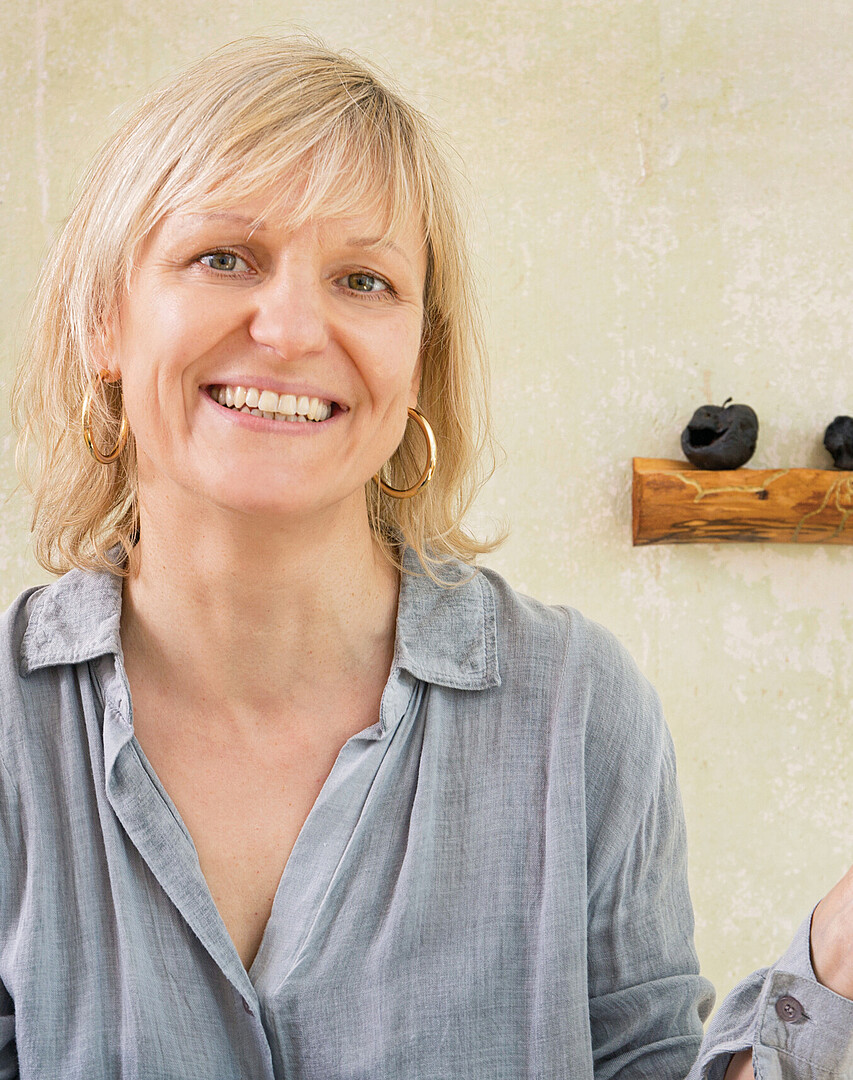
The host was the "MY-CO BUILD" Collaborative Research Center at TU Berlin, which the German Research Foundation (DFG) has been funding since 2026. Under the leadership of biotechnologist and artist Prof. Dr. Vera Meyer of TU Berlin, teams from biotechnology, engineering, and architecture are researching how fungal building materials can be produced, tested, and evaluated. The focus is often on tinder fungus (Fomes fomentarius), a fungus widespread in native forests.
"We have already achieved so much: a new discipline, 'Fungal Materials Science,' and a new, fitting international conference series that unites the natural sciences, the humanities, the arts, design, architecture, and DIY. And in doing so puts people and their culture at the center — to use that as a starting point for finding new sustainable solutions for the future," explains Prof. Dr. Vera Meyer. The conference had 165 participants and will take place again next year: "For many participants, the keynote lectures and conversations were more than just an inspiration: they were eye-opening and groundbreaking. BwF 2026 has thus created an excellent foundation for the success of the conference series, and I am already looking forward to welcoming everyone back here in Berlin in 2027." The dates for that are October 5 to 8, 2027.
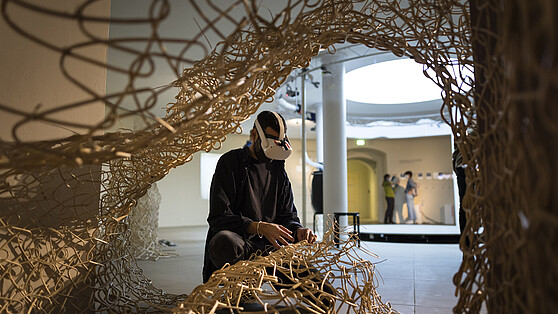
That Brain City Berlin is a good place for this topic was shown by the program: alongside TU Berlin with architect Prof. Anupama Kundoo, participants included the Humboldt University of Berlin's "Matters of Activity" Cluster of Excellence and the Berlin-Weißensee Academy of Art. A materials exhibition on October 14 made the materials tangible, and film screenings and workshops rounded out the program. Anyone who would like to see the fungal materials for themselves has the opportunity at the German Museum of Technology: MY-CO BUILD is part of the exhibition "SuperCity 3000. Our City of the Future." It runs until June 27, 2027.
Further information
More Stories
-
Talent Facts & Events
 © Berlin Science Week
Talent Facts & EventsIn touch with science: Berlin Science Week 2026.→
In touch with science: Berlin Science Week 2026
-
Startup Facts & Events Innovations
 © HU Berlin / Stefan Klenke
Startup Facts & Events InnovationsThe Berlin Battery Lab: Research into sodium-ion batteries.→
The Berlin Battery Lab: Research into sodium-ion batteries
-
Facts & Events
 © The Nobel Committee for Physiology or Medicine. Ill. Mattias Karlén
Facts & EventsNobel Prize in Medicine for Peter Hegemann: How an algal protein changed brain research→
Nobel Prize in Medicine for Peter Hegemann: How an algal protein changed brain research
-
Talent Facts & Events Transfer – Stories
 © Natalia Slepenko via idw
Talent Facts & Events Transfer – StoriesResearching together, thinking together: Berlin institutions join forces in materials research.→
Researching together, thinking together: Berlin institutions join forces in materials research
-
Facts & Events
 © DLR (CC-BY-NC-ND 3.0)
Facts & EventsHow can we commute more sustainably?→
How can we commute more sustainably?
-
Facts & Events Transfer – Stories Innovations
 © Mikhail Rudenko
Facts & Events Transfer – Stories InnovationsBerlin research moves closer to the diamond-based quantum internet.→
Berlin research moves closer to the diamond-based quantum internet
-
Transfer – Stories Innovations
 © Michael Radke, Max Delbrück Center
Transfer – Stories InnovationsHidden switch in the heart: Berlin research opens new avenues against heart disease.→
Hidden switch in the heart: Berlin research opens new avenues against heart disease
-
Facts & Events Innovations
 © Qui Nguyen via Unsplash
Facts & Events InnovationsCorals under pressure: Charité researches the resilience of reefs.→
Corals under pressure: Charité researches the resilience of reefs
-
Facts & Events
 © NASA/GSFC
Facts & EventsNASA probe reveals a tumbling, peanut-shaped asteroid.→
NASA probe reveals a tumbling, peanut-shaped asteroid
-
Facts & Events
 © WISTA Management GmbH/Cindy Böhme
Facts & EventsCinema under the stars in Adlershof.→
Cinema under the stars in Adlershof
-
Transfer – Stories Innovations
 Transfer – Stories InnovationsBerlin gives deep tech a strategy: The Deep Tech Berlin Agenda has been adopted.→
Berlin gives deep tech a strategy: The Deep Tech Berlin Agenda has been adopted
-
Talent Innovations
 Talent InnovationsFalling Walls Lab 2026: Apply now and come to Berlin.→
Falling Walls Lab 2026: Apply now and come to Berlin
-
Talent Innovations
 © Essi Glomb / Weißensee Kunsthochschule Berlin
Talent InnovationsDesign meets technology: Hannah Friederike Fischer from DFKI Berlin in interview.→
Design meets technology: Hannah Friederike Fischer from DFKI Berlin in interview
-
Transfer – Stories Innovations
 © PTB | Stephanie Rubrecht
Transfer – Stories InnovationsEarlier detection of mental illness: the Einstein Center for Youth Mental Health gets under way.→
Earlier detection of mental illness: the Einstein Center for Youth Mental Health gets under way
-
Facts & Events
 © Berlin Partner / FTB Werbefotografie
Facts & EventsScience in ten minutes: Science Slams at the Zeiss-Großplanetarium.→
Science in ten minutes: Science Slams at the Zeiss-Großplanetarium
-
Talent Facts & Events
 © M. Gasch
Talent Facts & EventsBerlin State Teaching Prize: a spotlight on excellent university teaching.→
Berlin State Teaching Prize: a spotlight on excellent university teaching
-
Facts & Events
 Facts & EventsHealth XP: the medicine of the future, on tour.→
Health XP: the medicine of the future, on tour
-
Facts & Events
 © NASA
Facts & EventsBerlin science in space: Mars research at the DLR.→
Berlin science in space: Mars research at the DLR
-
Facts & Events
 Facts & EventsBerlin's science festival for climate and health: The second Transferale.→
Berlin's science festival for climate and health: the second Transferale
-
Facts & Events
 © Marion Borriss via LNDW
Facts & EventsLong Night of the Sciences 2026: More than 1,000 events.→
Long Night of the Sciences 2026: More than 1,000 events
-
Innovations
 © Pexels / Tara Winstead
InnovationsWhy does performance fluctuate so dramatically in ADHD? A Berlin researcher has a new answer.→
Why does performance fluctuate so dramatically in ADHD? A Berlin researcher has a new answer
-
Startup Facts & Events
 © Christoph Soeder / Deep Tech Berlin
Startup Facts & EventsDeep Tech Award 2026: The winners have been announced.→
Deep Tech Award 2026: The winners have been announced
-
Facts & Events
 Berlin Partner - Scholvien
Facts & EventsThe 2026 university open days: What should I study?→
The 2026 university open days: What should I study?
-
Startup Innovations
 © TECC-Connect / SOLYCO
Startup InnovationsDeep tech startup SOLYCO TECC is making the solar industry cleaner.→
Deep tech startup SOLYCO TECC is making the solar industry cleaner
-
Facts & Events Innovations
 © Berlin Partner
Facts & Events InnovationsThe finalists for the Deep Tech Award 2026 have been announced.→
The finalists for the Deep Tech Award 2026 have been announced
-
Facts & Events
 © Kevin Fuchs
Facts & EventsTwo new research centres open at Charité.→
Two new research centres open at Charité
-
Facts & Events Transfer – Stories
 © Retusche: Gabriel_Kienast / Wissenschaft im Dialog, CC BY-SA 4.0
Facts & Events Transfer – StoriesThe MS Wissenschaft sets sail: Discover the medicine of the future on board.→
The MS Wissenschaft sets sail: Discover the medicine of the future on board
-
Talent Facts & Events Transfer – Stories
 © Ilona Buchem
Talent Facts & Events Transfer – StoriesA social robot to help reduce stress: NEFFY 2.0 from Brain City Berlin→
A social robot to help reduce stress: NEFFY 2.0 from Brain City Berlin
-
Facts & Events Transfer – Stories
 © Bayer AG
Facts & Events Transfer – StoriesA new Future Site for Berlin: The Health Innovation Quarter in Mitte.→
A new Future Site for Berlin: The Health Innovation Quarter in Mitte
-
Facts & Events
 © Einstein Stiftung Berlin | Pablo Castagnola
Facts & EventsNew approaches to disease prevention: Einstein Center for Early Disease Interception opens.→
New approaches to disease prevention: Einstein Center for Early Disease Interception opens
-
Facts & Events Innovations
 © Freie Universität Berlin / Janet Wagner
Facts & Events InnovationsLiving Forest Laboratories in Berlin: It's Growing!→
Living Forest Laboratories in Berlin: It's Growing!
-
Facts & Events
 Source: Stefan Klenke
Facts & EventsBerlin University Alliance confirmed for continued funding as Germany's first excellence network.→
Berlin University Alliance confirmed for continued funding as Germany's first excellence network
-
Facts & Events Transfer – Stories
 v.l.n.r.: © GSCN / Arne Sattler © Jenny Evers © GABO © Linda Böse © Charlot van Heeswijk © LakoF Geschäftsstelle © KHSB © Anne Barth ©SPB_Pedro Bacerra
Facts & Events Transfer – StoriesWomen shaping science: Perspectives from Berlin's research landscape on International Women's Day.→
Women shaping science: Perspectives from Berlin's research landscape on International Women's Day
-
Startup Facts & Events
 © Berlin Partner - eventfotografen.berlin
Startup Facts & EventsExcellence meets entrepreneurial spirit: Science & Startups strengthens Berlin’s position in Europe.→
Excellence meets entrepreneurial spirit: Science & Startups strengthens Berlin’s position in Europe
-
Facts & Events
 © Charité | Arne Sattler
Facts & EventsAccelerating medical innovation: New ARC Center bundles expertise.→
Accelerating medical innovation: New ARC Center bundles expertise
-
Talent Facts & Events
 © WISTA Management GmbH
Talent Facts & EventsAdlershof Dissertation Award 2025 goes to early-career researcher Dr Sascha Robert Gaudlitz.→
Adlershof Dissertation Award 2025 goes to early-career researcher Dr Sascha Robert Gaudlitz
-
Facts & Events
 © Berlin Partner. Copyright: Wüstenhagen
Facts & EventsWorld Cancer Day 2026: How research from Berlin is strengthening women’s health.→
World Cancer Day 2026: How research from Berlin is strengthening women’s health
-
Facts & Events
 Image by Fionn Grosse via Unsplash
Facts & EventsUrban Development Congress 2026: What visions are shaping the cities of tomorrow?→
Urban Development Congress 2026: What visions are shaping the cities of tomorrow?
-
Facts & Events
 © Terrartives, Crete, Greece
Facts & EventsClimate protection where others go on holiday: How Berlin-based research is making the Mediterranean more resilient→
Climate protection where others go on holiday: How Berlin-based research is making the Mediterranean more resilient
-
Startup Facts & Events
 Photo credit: © Samuel Stuart Hollenshead / NYU Photo Bureau
Startup Facts & EventsNew York University becomes a strategic partner university of Humboldt-Universität zu Berlin.→
New York University becomes a strategic partner university of Humboldt-Universität zu Berlin
-
Stories categories Facts & Events
 © Berliner Partner. Copyright: Eventfotografen Berlin
Stories categories Facts & EventsOutlook: What will matter in Berlin science in 2026.→
Outlook: What will matter in Berlin science in 2026
-
Insights Facts & Events
 © Bundespreis Ecodesign. Urheber/in: IDZ Berlin
Insights Facts & Events“Mach Moor - Design with Paludiculture”: An Exhibition on Peatland Protection in Berlin→
“Mach Moor - Design with Paludiculture”: An Exhibition on Peatland Protection in Berlin
-
Facts & Events
 © Christop Sapp (denXte)
Facts & EventsProf. Dr. Barbara Vetter from the FU Berlin and Prof. Dr. Klaus-Robert Müller from the TU Berlin receive Germany's most prestigious research funding…→
Leibniz Prizes for Philosopher and Computer Scientist from Berlin
-
Facts & Events Transfer – Stories
 © Agentur Medienlabor / Stefan Schubert
Facts & Events Transfer – StoriesFive companies from the capital region were honoured for their visionary ideas and products, and another received a special award.→
Berlin Brandenburg Innovation Award 2025 – The Winners
-
Facts & Events
 © Berlin Partner / Wüstenhagen
Facts & EventsFrom 24 to 28 November 2025, cooperation between science and industry will once again be the focus of Transfer Week Berlin-Brandenburg.→
Transfer Week Berlin-Brandenburg 2025
-
Facts & Events
 © Berlin Partner / Elvina Kulinicenko
Facts & EventsIn October/November, construction began on three prominent research buildings in Berlin, and another was officially opened. Here’s an overview.→
Showcases, Hubs and Innovation Platforms: What’s new in Brain City Berlin?
-
Facts & Events
 Berlin Science Week 2025 © Design: Bjoern Wolf / Graphic: Martin Naumann
Facts & EventsFrom 1 to 10 November, Berlin Science Week once again invites you to explore Brain City Berlin. This year’s motto “BEYOND NOW”.→
Opening new perspectives: Berlin Science Week 2025
-
Facts & Events
 © Berlin University Alliance
Facts & EventsStarting October 10, 2025, the exhibition “On Water. WasserWissen in Berlin” at the Humboldt Laboratory will present entirely new perspectives on the…→
“On Water”: Rethinking Water
-
Facts & Events Transfer – Stories
 © Christian Kielmann
Facts & Events Transfer – StoriesA new laboratory facility is being built on the campus of Technische Universität Berlin, where up to twelve transfer teams will be able to develop…→
Construction Kick-off: „Chemical Invention Factory“
-
Insights Facts & Events
 © Matters of Activity / HU Berlin
Insights Facts & EventsOn 19 September, the Cluster of Excellence ‘Matters of Activity’ will hold its final annual conference. Brain City interview with Dr Christian Stein.→
“We bring the material to eye level”
-
Facts & Events
 © Graziela Diez
Facts & EventsWith her project "Data Worker's Inquiry", the Berlin-based sociologist and computer scientist draws attention to exploitative conditions in AI labour.…→
Dr. Milagros Miceli Named to TIME 100 List of the Most Influential People in AI
-
Facts & Events Transfer – Stories
 © TU Berlin / allefarben-foto
Facts & Events Transfer – StoriesDrone logistics, recycling of building material and wastewater reuse: these ideas are to be tested in so-called “Reallaboren” (Real-World…→
Three Real-World Laboratories are being Launched in Berlin
-
Facts & Events
 © mfn / Carola Radke
Facts & EventsOn 6 October, the mit:forschen! team invites you to the first Campus Citizen Science event at the Museum für Naturkunde Berlin.→
Campus Citizen Science: Artificial Intelligence
-
Facts & Events Transfer – Stories
 © Stefan Klenke / HU Berlin
Facts & Events Transfer – StoriesBerlin-based battery researcher Prof. Dr. Philipp Adelhelm has been awarded the 2024 Berlin Science Award. Prof. Dr. Inka Mai from TU Berlin received…→
Prof. Dr. Philipp Adelhelm honored with Berlin Science Award
-
Insights Facts & Events
 © Ernestine von der Osten-Sacken
Insights Facts & EventsIt's all about future food production: in the CUBES Circle project, scientists are researching how established agricultural production systems can be…→
How tomatoes, fish and insects keep each other going
-
Facts & Events
 © BHT / Simone M. Neumann
Facts & EventsHere are three exciting updates where our Brain City Ambassadors play a key role.→
UNITE is on its way - and some more news
-
Facts & Events
 © Pelin Asa, Matters of Activity / Max Planck Institute of Colloids and Interfaces
Facts & EventsThe exhibitions “Symbiotic Wood” and “Swamp Things!” by the Cluster of Excellence “Matters of Activity” look at beetle damage, fungal infestation and…→
Inspired by beetles and moorland plants
-
Facts & Events
 © LNDW
Facts & EventsThe LNDW is celebrating its anniversary this year. The programme includes more than 1,000 events. Tickets are available at a special anniversary…→
25 years of Long Night of Science
-
Facts & Events
 © Berlin University Alliance / Matthias Heyde
Facts & EventsThe decision has been made: Brain City Berlin is entering the next round of Excellence funding from the Federal and State governments with five…→
Excellence strategy: Berlin to participate with 5 clusters
-
Facts & Events
 © Ilja C Hendel / Wissenschaft im Dialog, CC BY-SA 4.0
Facts & EventsIt's that time again: the exhibition ship once again is sailing on German waters. 29 cities are on the programme this year.→
Ahoi! MS Wissenschaft on Tour 2025
-
Facts & Events Transfer – Stories
 © DLR (CC BY-NC-ND 3.0)
Facts & Events Transfer – StoriesWith the newly founded institute, the German Aerospace Center is pooling its expertise in the field of space instruments and space research in Brain…→
New DLR Institute of Space Research
-
Facts & Events
 © TU Berlin / Ulrich Dahl
Facts & EventsTogether with Berlin Universities Publishing (BerlinUP), Technische Universität Berlin is actively involved in setting up the national Service centre…→
Strengthening open science
-
Facts & Events
 © Agentur Medienlabor / Stefan Schubert
Facts & EventsIdeas for innovative products, concepts and solutions are sought that exemplify the innovative power and economic strength of the capital region.→
Berlin Brandenburg Innovation Award 2025: Apply by July 14!
-
Facts & Events
 © Frank Richtersmeier
Facts & EventsAn Easter walk can easily be combined with a good cause. Here are our Citizen Science favourites.→
Master Hare and Butterflies – Explore Nature at Easter!
-
Facts & Events
 © Robin Baumgarten
Facts & EventsOn April 14, Urania Berlin celebrates World Quantum Day - and 100 years of quantum physics. The event is hosted by the German Physical Society (DPG).→
World Quantum Day 2025: Quantum Research for Everyone
-
Facts & Events
 © Institute for the History of Medicine and Medical Ethics, Charité (IGM-K-HPAC 3086-1908)
Facts & EventsIn the exhibition “Inventing-Mania!”, the Berlin Museum of Medical History tells the story of “Engineer von Tarden” and his sailing airship.→
Inventing-Mania – and the Dream of Flying
-
Facts & Events
 Prof. Dr. Volker Haucke: FMP © Silke Oßwald; Prof. Dr. Ana Prombo: MDC © Pablo Castagnola
Facts & EventsProf. Dr. Ana Pombo (MDC) and Prof. Dr. Volker Haucke (FMP), have been awarded the Gottfried Wilhelm Leibniz Prize 2025.→
Leibniz Prize for 2 top Berlin researchers
-
Facts & Events Transfer – Stories
 © Berlin Partner / eventfotografen.berlin
Facts & Events Transfer – StoriesOn March 4, a total of 19 universities, colleges and non-university research institutions signed the statutes of UNITE Sciences e.V.→
UNITE Sciences: Accelerating technology transfer
-
Facts & Events
 © ZAUM / Christine Weil
Facts & EventsA research group from Charité – Universitätsmedizin Berlin has developed an app that allows the pollen count in Brain City Berlin to be tracked at…→
Charité App "Pollenius": Data from the Pollen Trap
-
Insights Innovations
 © Berlin Institute for Innovation
Insights Innovations“Innovation = Invention + Market Penetration” is the working formula of the Berlin Institute for Innovation. The team takes a scientifically sound…→
The Research Manufactory
-
Facts & Events
 © HTW Berlin/ Alexander Rentsch
Facts & EventsAt 51 percent, Brain City Berlin has the highest rate of first-time university graduates in Germany.→
First university degrees: Berlin in top position nationwide in 2023
-
Facts & Events
 © Shutterstock/Sineeho
Facts & EventsResearchers at the Max Planck Institute for Human Development conducted a meta-analysis to examine who is particularly susceptible to fake news that…→
Fake News: Who falls for it and why?
-
Facts & Events
 © UdK Berlin / Design: Ira Göller und Sophie Pischel
Facts & EventsOn 8 February, the Berlin University of the Arts will kick off its anniversary year. With interdisciplinary performances, dance, theatre,…→
50 years: UdK Berlin celebrates the diversity of its disciplines
-
Facts & Events Transfer – Stories
 © IHK Berlin
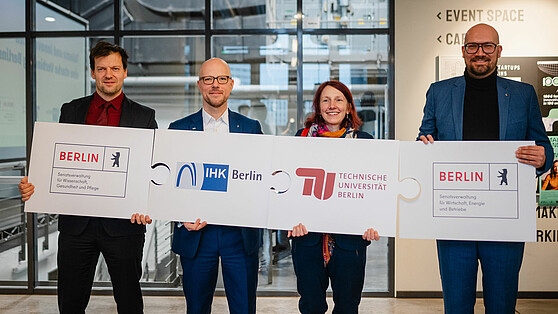
Facts & Events Transfer – StoriesTU Berlin and IHK Berlin want to work closely together to promote university spin-offs and innovation in Brain City Berlin. An agreement has now been…→
Cooperation agreement between TU Berlin and IHK Berlin signed
-
Facts & Events
 © Shutterstock. AI Generator
Facts & EventsDo stable relationships matter more to women or to men? A study, in which the Institute of Psychology at HU Berlin was involved in a leading role,…→
Romantic Gender Gap
-
Facts & Events
 © LNDW/Matthias Frank
Facts & Events200 years of Museumsinsel, 100 years of quantum science, 50 years of the Berlin University of the Arts, 25 years of LNDW: In 2025, Brain City Berlin…→
Brain City Berlin 2025: our Top 10 Events
-
Facts & Events
 © Agentur Medienlabor | Stefan Schubert
Facts & EventsThe winners of the Berlin Brandenburg Innovation Award 2024 have been announced. A total of 125 companies, teams, and collaborations from science and…→
Innovation Award 2024: Winners
-
Facts & Events Transfer – Stories
 © Berlin Partner
Facts & Events Transfer – StoriesThe fourth Transfer Week Berlin-Brandenburg from November 25 to 29 will focus on the latest developments in regional transfer activities. 62 partner…→
The future of knowledge transfer: Transfer Week 2024
-
Facts & Events
 © Falling Walls Foundation
Facts & EventsFrom 1 to 10 November Brain City Berlin will once again be in the spotlight. The varied programme of the 9th Berlin Science Week includes more than…→
Finding common ground: Berlin Science Week 2024
-
Facts & Events Transfer – Stories
 © CeRRI 2024
Facts & Events Transfer – StoriesTransfer activities and research do not compete with each other. On the contrary! This is one of the key findings of the “Transfer 1000” study…→
„Transfer 1000“: Study on science transfer
-
Facts & Events Transfer – Stories
 © HTW/ZfS
Facts & Events Transfer – StoriesClimate, health and sustainability – these are the main topics of Transferale. From 25 to 27 September, the science and transfer festival will be held…→
Ideas for Berlin’s future
-
Facts & Events
 © Adobe Stock/stockartstudio
Facts & EventsThe Humboldt-Universität zu Berlin has almost doubled the proportion of women in professorships in around 15 years. The gender ratio among academic…→
HU Berlin: more women in science
-
Facts & Events
 © Max Delbrück Center / Felix Petermann
Facts & EventsDr. Gabriele Schiattarella has been presented with the “Outstanding Investigator Award” by the International Society for Heart Research ISHR. The…→
Berlin heart researcher honoured
-
Facts & Events
 firefly.adobe (AI-generated)
Facts & EventsA research team from the “Global Lake Ecological Observatory Network” (GLEON) has summarised which factors can curb blue-green algae. Researchers from…→
Heavy rain, fish and bacteria: What stops blue-green algae?
-
Facts & Events
 © TU Berlin / Philipp Arnoldt
Facts & EventsThis will be possible in the joint university library of TU Berlin and UdK Berlin from January 2025. The Berlin Senate approved the model project for…→
Studying in the university library 24/7
-
Facts & Events
 © Max Delbrück Center / Stefanie Loos
Facts & EventsOn the evening of 22 June, Brain City Berlin will once again present itself in all its diversity. The motto of the LNDW 2024: “Experience. Understand.…→
Long Night of Science 2024
-
Facts & Events
 © Landesarchiv Berlin/Wunstorf
Facts & EventsThe linguist was honoured with the Berlin Science Prize 2023 by the Governing Mayor of Berlin, Kai Wegner on May 27. The Young Talent Prize went to…→
Berlin Science Prize 2023 for Artemis Alexiadou
-
Facts & Events
 © mit:forschen!
Facts & EventsScientists from all disciplines can still be nominated until 3 June for the “Wissen der Vielen – Forschungspreis für Citizen Science” 2024.→
Wanted: excellent publications on citizen science!
-
Facts & Events
 © HWR Berlin/Lukas Schramm
Facts & EventsStudy – yes. But at which university? And above all: which subject? This year, Berlin’s universities and colleges are once again inviting students to…→
Student Information Days 2024
-
Facts & Events
 © Berlin University Alliance
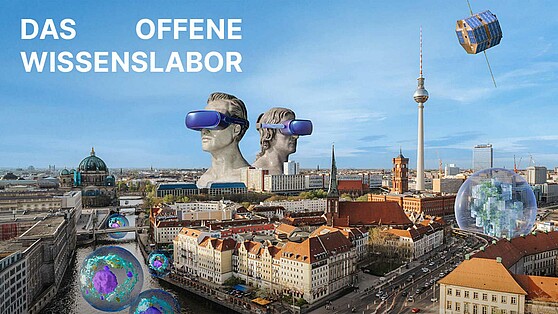
Facts & Events“The Open Knowledge Laboratory – for the great transformations of our time”: With a new campaign, the Berlin University Alliance is making…→
Berlin University Alliance launches a new campaign
-
Facts & Events
 © Retusche: Ralitsa Kirova/Wissenschaft im Dialog CCBY-SA4.0
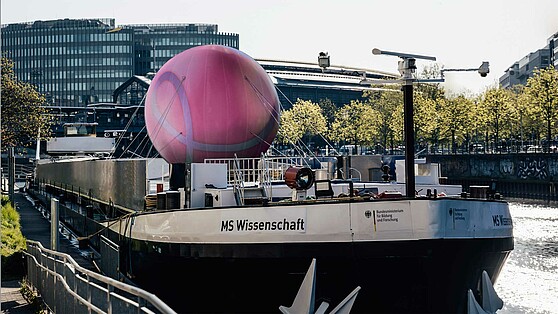
Facts & EventsFrom 14 May, the floating science centre “MS Wissenschaft” will once again embark on a long voyage through Germany with an interactive exhibition on…→
All aboard! MS Wissenschaft on tour
-
Facts & Events
 © Agentur Medienlabor
Facts & EventsThe application phase is open: Until July 8, companies, start-ups and craft businesses based in the Capital Region can submit their documents for the…→
Starting signal for the Berlin Brandenburg Innovation Award 2024
-
Insights Transfer – Stories Innovations
 © Berlin Partner
Insights Transfer – Stories InnovationsQuantum technology is considered to be the next big technological leap. The Brain City Berlin offers ideal conditions for this.→
BERLIN QUANTUM: a new initiative for quantum technologies
-
Facts & Events
 © xg-incubator.com
Facts & EventsUntil March 31, start-ups and founders can apply for the new xG-Incubator of TU Berlin and Fraunhofer HHI.→
Apply now! Ideas for the future of communication
-
Facts & Events
 Shutterstock © LightField Studios
Facts & EventsHU Berlin, TU Berlin, ASH Berlin, BHT and HfS Ernst Busch – these Berlin universities have been selected for funding in the first round of the Joint…→
Professorinnenprogramm 2030: 5 Berlin universities selected
-
Facts & Events
 © HTW Berlin/Chris Hartung
Facts & EventsFrom 12 to 16 February, the Career Services of the universities and colleges in Berlin and Brandenburg invite you to the first joint Career Week. It…→
Tips and information on starting a career
-
Facts & Events Transfer – Stories
 TU Berlin © Felix Noak
Facts & Events Transfer – StoriesInterdisciplinary research teams have until 29 April to submit their proposals for the Next Grand Challenge initiative of the Berlin University…→
Next Grand Challenge: apply now!
-
Facts & Events
 LNDW / Freie Universität Berlin © Rolf Schulten
Facts & EventsWhether it’s about freedom, time or knowledge transfer – the Brain City Berlin calendar of events in 2024 will once again include many exciting topics…→
Brain City Berlin 2024: our Top 10
-
Facts & Events Transfer – Stories
 © Alfred-Wegener-Institut/Micheal Gutsche (CC-BY 4.0)
Facts & Events Transfer – StoriesA special exhibition at the Deutsches Technikmuseum makes things crystal clear: There is little time left to save the Arctic.→
Exhibition tip: “Thin ice”
-
Facts & Events Transfer – Stories
© BPWT
Facts & Events Transfer – StoriesWith an all-day kick-off conference in the stilwerk KantGaragen, the Transfer Week Berlin-Brandenburg 2023 starts. From 20 to 24 November, the event…→
“Science x Business”: Transfer Week 2023
-
Facts & Events Transfer – Stories
 © Falling Walls Foundation
Facts & Events Transfer – StoriesBerlin Science Week is back from November 1 to 10. New this year: The ART & SCIENCE FORUM at Holzmarkt 25 is the central location of the science…→
With a focus on art & science: Berlin Science Week 2023
-
Facts & Events
 © SPB/Natalie Toczek
Facts & Events100 years of the Planetarium: On 21 October, the Zeiss-Großplanetarium celebrates the star show anniversary with a colourful program of astronomy,…→
Travel to space for free
-
Facts & Events Transfer – Stories
 © Peter Himsel/Campus Berlin-Buch GmbH
Facts & Events Transfer – StoriesBrain City Berlin has a new start-up centre: The BerlinBioCube on the Campus Berlin-Buch includes 8,000 square metres of modern laboratory and office…→
The BerlinBioCube is open
-
Facts & Events
 shutterstock.com©NicoEINino
Facts & EventsIn the "OpinionGPT" project, researchers at HU Berlin are investigating how biased training data affect artificial intelligence responses.→
Deliberately biased
-
Facts & Events
 © FU Berlin/Bernd Wannenmacher
Facts & Events“Oral-History.Digital” is the name of a portal that went online this week. The University Library of the FU Berlin is a partner in the project funded…→
New platform for contemporary witness interviews
-
Facts & Events Transfer – Stories
 © HU Berlin
Facts & Events Transfer – Stories“TRAIN 4 Science” encourages children, but also adults, to deal with climate change in a playful way. The app was developed in the Brain City Berlin…→
All aboard the climate train: a learning app from HU Berlin
-
Facts & Events
 © DLR. All rights reserved
Facts & EventsIn the "DLR_School_LAB Online Observatory" schoolchildren across Germany can now observe the sun live online.→
Travel to the sun from the classroom
-
Facts & Events
 LNDM: Kulturprojekte © Christian Kielmann
Facts & EventsDo you get bored during the holidays? The Brain City Berlin offers a whole load of variety! Here are our holiday favourites.→
10 tips for the summer
-
Facts & Events Transfer – Stories
 © BHT/Zarko Martovic
Facts & Events Transfer – StoriesOn 17 June, more than 60 scientific and science-related institutions in the Brain City Berlin and Potsdam will open their doors for the “Long Night of…→
Lange Nacht der Wissenschaften 2023
-
Facts & Events
 © FU Berlin / Svea Pietschmann
Facts & Events"Free thinking. Forming responsibility. Shaping change." Under this motto, the Freie Universität Berlin is celebrating its 75th birthday this year…→
75 Years of Freie Universität Berlin
-
Facts & Events Transfer – Stories
 © BSBI
Facts & Events Transfer – StoriesOn 24 June the AI scene will meet in Berlin-Neukölln. The “1st International Conference on Artificial Intelligence” at the BSBI is primarily about the…→
AI Conference at the Berlin School of Business & Innovation
-
Facts & Events
 [Translate to English:] © David Ausserhofer
Facts & EventsThe Young Scientist Award (Nachwuchspreis) also went to a researcher from TU Berlin: Dr. Anja Maria Wagemans.→
TU professor Dr. Bénédicte Savoy receives Berliner Wissenschaftspreis
-
Facts & Events
 © ASH Berlin
Facts & EventsThe new extension building of ASH Berlin will create urgently needed space for around 1,700 students and a new refectory. The building is scheduled…→
Alice Salomon University celebrates topping-out ceremony
-
Facts & Events Innovations
 © Brand, Gao, Hamann, Martineck, Stangl/Charité
Facts & Events InnovationsThe Charité-Universitätsmedizin Berlin wants to inform patients with a comic before a heart catheter examination. As part of a study, the…→
A picture is worth a thousand words
-
Facts & Events Transfer – Stories
 © BVG/Andreas Süß
Facts & Events Transfer – StoriesWhat does an electric bus sound like? Lukas Esser, a student at Berlin University of the Arts, has developed the new sound for Germany’s electric…→
Electric sound of the future
-
Facts & Events
 © DFG/David Ausserhofer
Facts & EventsHumanities scholar Prof. Dr. Anita Traninger received the Award from the German Research Foundation (DFG) last Wednesday in Brain City Berlin.→
Leibniz Award for FU Professor Anita Traninger
-
Facts & Events Transfer – Stories
 © Maschinenraum
Facts & Events Transfer – StoriesThe University of Applied Sciences wants to tap additional transfer potential by means of cooperation with the nationwide network of SMEs.→
HTW Berlin cooperates with Maschinenraum
-
Facts & Events Transfer – Stories
 © Berlin Partner
Facts & Events Transfer – StoriesWith a new image film Brain City Berlin starts the year 2023. Our Brain City Ambassadors are the protagonists of the video.→
“We are Brain City Berlin”
-
Facts & Events
 © DGZfP
Facts & EventsMany exciting and high-calibre events are once again on the Brain City Berlin event calendar this year. We present our favourites to you.→
Brain City Berlin 2023: the Top 10 Events
-
Facts & Events
 SOWG © Sarah Rauch/LOC
Facts & Events#TogetherUnbeatable: The Special Olympics World Games 2023 will be held in the sports metropolis of Berlin from 17 to 25 June. Researchers can…→
Special Olympics World Games Berlin: join a researcher!
-
Facts & Events
 © Agentur Medienlabor/Benjamin Maltry
Facts & EventsThe jury presented five awards and one special award for particularly innovative products, concepts and solutions from the capital region.→
Berlin Brandenburg Innovation Award: the winners 2022
-
Facts & Events Transfer – Stories
 © Transfer Week
Facts & Events Transfer – StoriesFrom 21 to 25 November, scientists can once again discuss future-oriented topics on a practical level together with companies from Berlin and…→
Providing impulses for cooperation: Transfer Week 2022
-
Facts & Events
 © Dirk Lamprecht / Visual Noise
Facts & EventsThe KinderUni Lichtenberg is celebrating its 20th anniversary this year with a “KUL Science Day” and an exciting series of lectures.→
From “Sweet, tasty – and dangerous” to “Riding a bike hands-free” - KUL lectures for children
-
Facts & Events Transfer – Stories
 © Falling Walls Foundation
Facts & Events Transfer – StoriesAn interview with Christine Brummer, director of Berlin Science Week.→
Opening up science for dialogue with society
-
Facts & Events
 © Senatsverwaltung für Wissenschaft, Gesundheit, Pflege und Gleichstellung
Facts & EventsProposals can be submitted until 14 November 2022. The award, presented by the Senate Department for Higher Education and Research, Health, Long-Term…→
Berliner Frauenpreis 2023
-
Facts & Events
 @ BUA
Facts & EventsTeenagers aged 14 to 18 and researchers and students from Brain City Berlin are invited to submit suggestions to the Berlin University Alliance for…→
Berlin University Alliance: Ideas wanted!
-
Facts & Events
 Futurium © David von Becker
Facts & EventsSummer holidays – six weeks in which we can explore Brain City Berlin in a completely new way. And not just at the Wannsee or Müggelsee. There are…→
5 Tips for the Holidays
-
Facts & Events
 Image: Berlin University Alliance
Facts & Events"Wissen aus Berlin" (Knowledge from Berlin) is the name of a YouTube channel of the Berlin University Alliance. There is a new episode every Tuesday.→
Knowledge from Berlin
-
Facts & Events
 Credit: Michael Kompe @ HWR Berlin
Facts & EventsA joint application from five Berlin universities and an individual application bei ASH Berlin for funding under the nationwide "Innovative…→
“Innovative University” Funding Programme: 2 Berlin Applications Successful
-
Facts & Events
 ©Agentur Medienlabor/Adam Sevens
Facts & EventsProducts, concepts and solutions are sought that exemplify the innovative capabilities and economic strength of the capital region. Companies based in…→
Berlin Brandenburg Innovation Award 2022: Apply by 4 July
-
Facts & Events
 Photo: Heiner Witte/Wissenschaft im Dialog
Facts & EventsFull steam ahead! From 3 to 8 May, the ‘MS Wissenschaft’ will be anchoring at the Schiffbauerdamm in Brain City Berlin.→
Exhibition tip: MS Wissenschaft in Berlin
-
Facts & Events
 HU Berlin/Matthias Heyde
Facts & EventsDecipher research via hidden object pictures: Since March, the HU Berlin is offering guided tours through the “Bahnhof der Wissenschaften” (“Station…→
Exhibition tip: Science Underground Tour
-
Facts & Events
 Photo: © Falling Walls Foundation
Facts & EventsWhether the Berlin Science Week, the Lange Nacht der Wissenschaften or the return of the dinosaur star Tristan Otto to Berlin: This year, the Brain…→
Brain City Highlights 2022: Our Top 10
-
Facts & Events
 © wörner traxler richter planungsgesellschaft mbH
Facts & EventsThe Charité - Universitätsmedizin Berlin and the German Heart Center Berlin (DHZB) will pool their competencies from January 2023. By 2028, one of the…→
New Heart Center for Berlin
-
Facts & Events
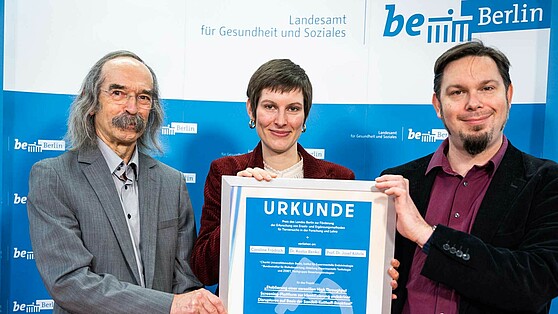 Photo: LAGeSo/Dirk Laessig
Facts & EventsCaroline Frädrich and Prof. Dr Josef Köhrle from the Institute of Experimental Endocrinology at the Charité – Universitätsmedizin Berlin along with Dr…→
“Berlin Research Award for Alternatives to Animal Experiments”: Award-winning Project by Charité and the BfR
-
Facts & Events
 © WZB/David Ausserhofer
Facts & EventsThe political scientist Michael Zürn has been awarded the Berliner Wissenschaftspreis 2021. The Nachwuchspreis went to the theologian Mira Sievers.→
Berliner Wissenschaftspreis 2021 for Michael Zürn
-
Facts & Events
 Prof. Claudia Langenberg; Prof. Marlis Dürkop-Leptihn; Prof. Gudrun Erzgräber, der Regierende Bürgermeister Michael Müller und Prof. Gesche Joost (v. li. n. re.), Foto: BIH/Konstantin Börner
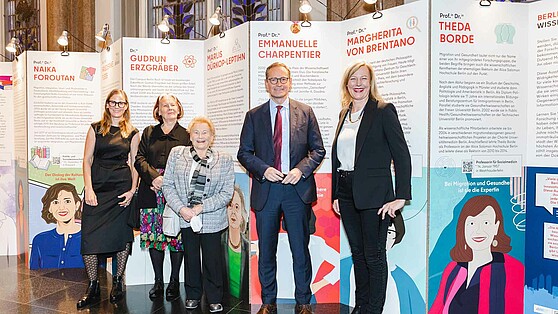
Facts & EventsEmmanuelle Charpentier, Lise Meitner, Cécile Vogt – an exhibition in the Rotes Rathaus presents 20 women pioneers from Brain City Berlin – and thereby…→
Exhibition: “Berlin – Capital of Women Scientists”
-
Facts & Events
 Credit: Element5 Digital on Unsplash
Facts & EventsFor three semesters, teaching and studying in the Brain City Berlin took place predominantly online. The lecture halls, seminar rooms, laboratories…→
Good Prerequisites: Semester Start 2021/22
-
Facts & Events
 Credit: Tag der Deutschen Einheit Halle (Saale)
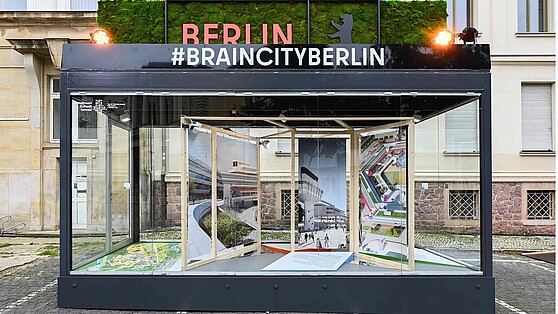
Facts & EventsOn 3 October, Brain City Berlin will be represented with the “Berlin Cube” at the EinheitsEXPO in Saxony-Anhalt.→
#BRAINCITYBERLIN at the Day of German Unity
-
Facts & Events
 Facts & EventsThe Berlin universities of applied sciences – four State and two denominational – are celebrating their anniversaries. On the occasion of the joint…→
50 Years – 50 Stories
-
Facts & Events
 Facts & EventsWith the science fair “Tabula rasa - Science you can touch”, Urania Berlin offers 40 young scientists a public forum. The application deadline is 1…→
Wanted: innovative and creative ideas from science and research!
-
Facts & Events
 Credit: Lars Hübner
Facts & EventsBrain City Ambassador Professor Dr. Christian Drosten has been awarded the Berliner Wissenschaftspreis 2020 for his outstanding research achievements.…→
Berliner Wissenschaftspreis 2020 for Christian Drosten
-
Facts & Events
 Credit: Harf Zimmermann/3-D-Visualisierung: Tonio Freitag
Facts & EventsBerlin celebrates science. We’ve put together a few highlights for you.→
"Wissensstadt Berlin 2021" – Our Top 10 Events
-
Facts & Events
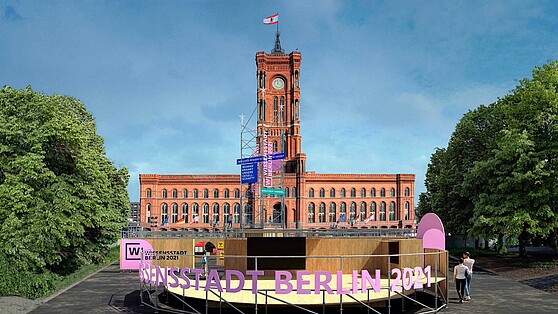 Foto: @Harf Zimmermann, 3-D-Visualisierung@ Tonio Freitag
Facts & Events“Berlin wants to know”: “Wissensstadt Berlin 2021” is getting underway with a large open-air exhibition in front of the Rotes Rathaus.→
“Wissensstadt Berlin 2021” – Festival of Research
-
Facts & Events
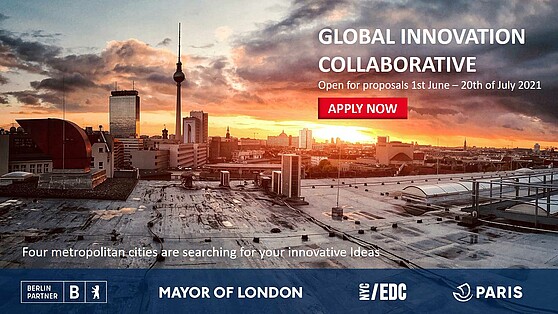 Facts & EventsAs part of the “Creative Cities Challenge”, the “Global Innovation Collaborative” is now looking for innovative solutions that will contribute to the…→
Apply until August 3: Call for Competition Entries “Creative Cities Challenge 2021”
-
Facts & Events
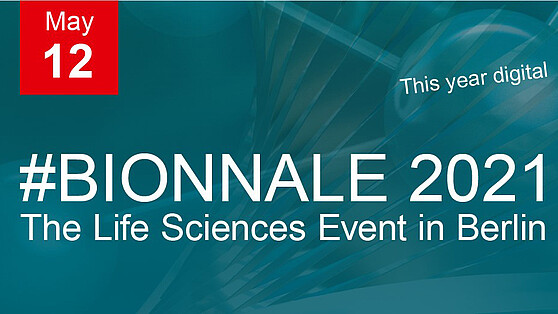 Facts & EventsCurrent technological developments in the field of life sciences, exchanges and networking will be the focus of BIONNALE on 12 May.→
BIONNALE 2021 – register now!
-
Facts & Events
 Credit: ThisisEngeneering RAEng on Unsplash
Facts & EventsIt is considered to be one of the most important instruments of Berlin's higher education equality policy: the “Berliner Chancengleichheitsprogramm”…→
Berlin Equal Opportunities Programme: 6 more years
-
Facts & Events
 Credit: Berlin Partner/Wüstenhagen
Facts & EventsThe online event “Redefining the Smart City” on 23 and 24 March is inviting international researchers and Smart City experts to various workshops.The…→
International symposium on the subject of Smart Cities
-
Facts & Events
 ThisisEngineering RAEng on Unsplash
Facts & EventsBerlin universities are above the national average in terms of equality. In 2020, the state universities in the Brain City Berlin filled around half…→
Capital of Female Professors
-
Facts & Events
 FU Berlin © Stephan Niespodziany, www.rejoyce.berlin
Facts & EventsDigital, hybrid, or live in-person: in 2021, events in the Brain City Berlin will still be shaped by the restrictions of the coronavirus pandemic.…→
Brain City Berlin: Top 10 Events in 2021
-
Facts & Events
 Matthias Heyde, HU Berlin
Facts & EventsThe new Unter den Linden underground station is currently teeming with science. An exhibition organised by the Humboldt-Universität zu Berlin shows…→
Exhibition tip: Science Underground
-
Facts & Events
 left: TU Berlin, Pressestelle / right: Marten Körner
Facts & EventsSeveral researchers in Brain City Berlin have recently received top-class prize grants. Gottfried Wilhelm Leibniz Prizes were awarded to Prof. Dr…→
7 research awards for Berlin scientists
-
Facts & Events
 Berlin Science Week
Facts & EventsWith more than 200 events and over 500 speakers, this year’s Berlin Science Week is bigger than ever before. However, the 2020 edition of the…→
Berlin Science Week 2020 – Digital and Global
-
Facts & Events
 MPG © Hallbauer und Fioretti
Facts & EventsThe Royal Swedish Academy of Sciences has given top Berlin researcher Professor Dr Emmanuelle Charpentier and American Professor Dr Jennifer A. Doudna…→
2020 Nobel Prize in Chemistry goes to Emmanuelle Charpentier: Congratulations!
-
Facts & Events
 ©Mario Gogh/Unsplash
Facts & EventsStart-ups arising from research being done at Berlin's universities are of major importance for the region's economy. As the “Gruendungsumfrage 2020”…→
Academic start-ups strengthen Berlin's economy
-
Facts & Events
 ©Samuel Henne
Facts & EventsThe exhibition MACHT NATUR at STATE Studio in Berlin focuses on the discomfort that many of us experience when faced with human intervention in…→
MACHT NATUR: an exhibition that asks questions
-
Facts & Events
 ©visitBerlin/Sarah Lindemann
Facts & EventsReal-world Laboratories are bringing scientists together with practitioners to develop solutions to the questions of tomorrow in an experimental…→
The "StadtManufaktur Berlin" Exhibition: experiments to create a city worth living in
-
Facts & Events
 LNDW/Irmisch
Facts & EventsThe Long Night of Sciences (Lange Nacht der Wissenschaften) has long been one of the highlights of the Brain City Berlin event calendar every June.…→
Long Night of the Sciences: this year as a podcast series
-
Facts & Events
 [Translate to English:] ©Fotowerk – AdobeStock
Facts & EventsThree new health care courses will start in the winter semester 2020/21 at the Alice Salomon Hochschule Berlin (ASH Berlin).→
Apply now - 3 new health degree courses at the ASH Berlin
-
Facts & Events
 © Futurium/Ali Ghandtschi
Facts & EventsFor all those who have not yet planned anything specific for the weekend - here are a few tips from the Brain City editorial team combining leisure…→
5 tips: Weekend in Brain City Berlin
-
Facts & Events
 Fotocredit: #MIT Covid-19 Challenge
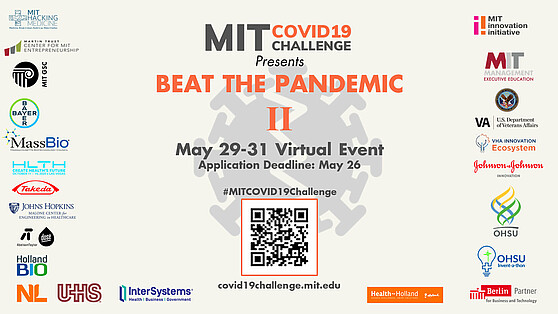
Facts & EventsApply for the #MIT Hackathon "Beat the Pandemic II" until 26 May! Experts from different fields are sought.→
"Beat the Pandemic II": Join the MIT COVID-19 Challenge
-
Facts & Events
 ©BIT6
Facts & EventsThe Coronvirusa crisis poses great challenges, especially for small and medium-sized companies. On 20 May, scientific experts will speak all day in…→
TRAO – digital transfer day on the 20th of May
-
Facts & Events
 ©Paul Hahn Photography
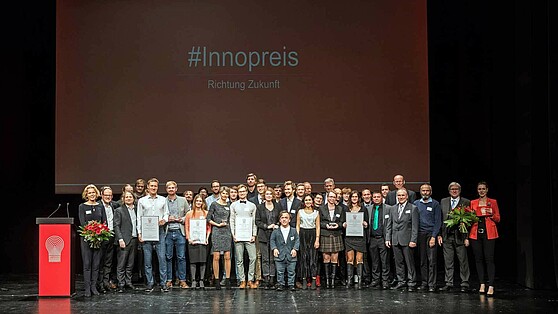
Facts & EventsBerlin's Senator for Economics, Ramona Pop, and Brandenburg's Minister of Economic Affairs, Jörgs Steinbach, have once again announced the search for…→
2020 Innovation Award: Apply by 22th June!
-
Facts & Events
 © Beuth Hochschule / Karsten Flügel
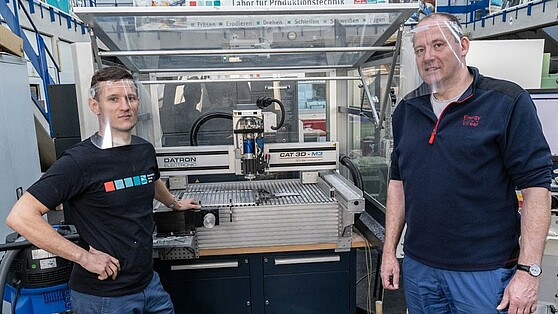
Facts & EventsBuildings, lecture halls and laboratories in the Brain City Berlin are currently closed to students, teachers and researchers due to the corona…→
COVID-19: Berlin universities are helping
-
Facts & Events
 ©FMP/ Barth van Rossum
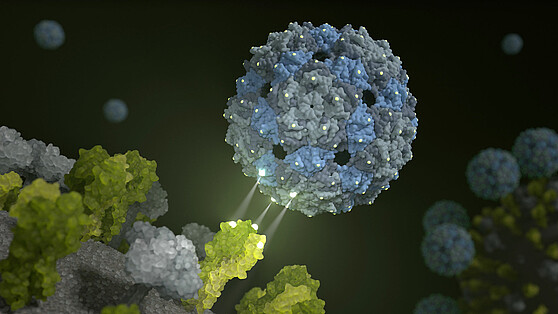
Facts & EventsUsing viruses against influenza, avian flu - and maybe soon also against Corona? An alliance of scientists from the Leibniz-Forschungsinstitut für…→
Berlin research alliance develops influenza inhibitor
-
Facts & Events
 ©TU Berlin Pressestelle / Dahl
Facts & EventsThe coronavirus pandemic carries many risks, not only for individuals, but also for society. But how are the risks being perceived? And how are people…→
Risk perception in the coronavirus crisis: a survey from TU Berlin
-
Facts & Events
 [Translate to English:] ©Marcel/Unsplash
Facts & EventsBe it the greater mouse-eared bat, the brown long-eared bat, the serotine bat or the common noctule – bats feel particularly at home in Berlin. 18 of…→
Until 8th of March: Bat Capital seeks hobby researchers
-
Facts & Events
 © Falling Walls Foundation
Facts & EventsWhether it is Berlin Science Week, Long Night of the Sciences or the Greentech Festival - the Berlin Science Year 2020 promises to be at least as…→
Brain City Berlin 2020: 10 Event Highlights
-
Facts & Events
 ©TU Berlin Pressestelle
Facts & Events“Berlin Institute for the Foundations of Learning and Data” (BIFOLD) is the new organisation that the Berlin Big Data Center (BBDC) and the Berlin…→
AI Beacon for Berlin: Millions in funding from the German Federal Government and State of Berlin
-
Facts & Events
 shutterstock © andersphoto
Facts & EventsBerliners win six high-ranking research awards: a total of five outstanding scientists received awards from the European Research Council. And Berlin…→
Six awards announced for Berlin scientists
-
Facts & Events
 ©IFAF
Facts & Events22.11.2019 | Interdisciplinarity is a central characteristic of science and research in Berlin. This was most recently proven when the Berlin…→
IFAF Berlin marks 10th anniversary
-
Facts & Events
 ©ADN Broadcast
Facts & Events31.10.2019 | For the second time, a Falling Walls Lab was held in Tunis, the capital of Tunisia, on 21 September 2019. The event was organized by…→
Brain City Ambassador organizes 2nd Falling Walls Lab in Tunis
-
Facts & Events
 ©Berlin Science Week 2019
Facts & Events23.10.2019 | Over 350 top researchers from all over the world, more than 130 events, and a new format: the "Berlin Science Campus". Berlin Science…→
10 days dedicated to science: Berlin Science Week 2019
-
Facts & Events
 ©Marvin Meyer/Unsplash
Facts & EventsMore students than ever before are expected to be enrolled at the colleges and universities in the Brain City Berlin by the winter semester 2019/20.…→
Start of the semester: 195,000 students expected | 17.10.2019
-
Facts & Events
 Fu Berlin / Peter Hirnsel
Facts & EventsBerlin is a cosmopolitan metropolis. People from more than 190 countries live and work in the city. More and more young, talented people who would…→
Berlin universities are extraordinarily international | 10.10.2019
-
Facts & Events
 UVB 2019 / André Wagenzik
Facts & EventsBrain City Berlin is considered one of the leading locations in Germany working on artificial intelligence. Berlin science is an important driver of…→
Accelerating the digital transformation: TU Berlin and business associations intensify cooperation | 02.10.2019
-
Facts & Events
 © ESMT Berlin/Fotografin: Annette Korrol
Facts & EventsAlso a great outcome for Brain City Berlin: Özlem Bedre-Defolie, Associate Professor of Economics at the ESMT Berlin international business school has…→
On the trail of dominant platforms: ESMT Professor receives around 1.5 million euro in grant funding | 11.09.2019
-
Facts & Events
 ©Futurium/David von Becker
Facts & EventsAlmost everyone's occupied with the future, because it's going to affect all of us. The Futurium, which opened yesterday in Brain City Berlin, invites…→
Creating public space for thinking in Brain City Berlin: the opening of the Futurium | 06.09.2019
-
Innovations
 [Translate to English:] Shutterstock/ Jacob Lund
InnovationsThe capital city fills almost half of the professorships with female scientists: 48 percent of the calls for professorships made by Berlin…→
Brain City Berlin – pioneering in equality issues | 10.07.2019
-
Facts & Events
 [Translate to English:] Peitz/Charité
Facts & EventsThe Brain City Berlin once again gets top-class new scientists: The medician and epidemiologist Prof. Dr. Dr. Sabine Gabrysch is the first female…→
First nationwide professorship for climate change and health in Berlin | 26.06.2019
-
Facts & Events
 [Translate to English:] Ottobock
Facts & EventsThe last school day in Berlin is over. Finally summer holidays! But some students might get bored while swimming all day in the Havel or the…→
Clever throughout the summer holidays | 19.06.2019
-
Facts & Events
 [Translate to English:] Florian Reimann
Facts & EventsThe future of the city: what could it look like? That's what Berlin's CityLAB is busy thinking about and researching. The Berlin experimental…→
Laboratory for the digitalization of Berlin: CityLAB opens | 13.06.2019
-
Facts & Events
 [Translate to English:] chris knight/unsplash
Facts & EventsBerliners with foreign roots are extremely innovative. According to a short report by IW, the Cologne Institute for Economic Research, 16.1% of the…→
Berliners with a migration background especially inventive | 29.05.2019
-
Facts & Events
 [Translate to English:] TU Berlin/Dahl
Facts & EventsBerlin is one of the most exciting centers for science and research in the world. Brain City Berlin is characterized by international and…→
Brain City Berlin: in free dialog with the world | 13.05.2019
-
Facts & Events
 [Translate to English:]
Facts & EventsIn the globally recognized QS University Ranking, Berlin's universities performed very well in many disciplines. They are 30 times among the top 50…→
QS World University Ranking 2019 - Berlin Universities are among the world's best in many disciplines | 21.03.2019
-
Facts & Events
 [Translate to English:] the climate reality project/usplash
Facts & EventsAlready for the third time the international conference "I, Scientist" takes place in the Brain City Berlin. From 20 to 21 September 2019, students…→
Register now! "I, Scientist" - Gender Conference for Women Scientists | 25.07.2019