


-
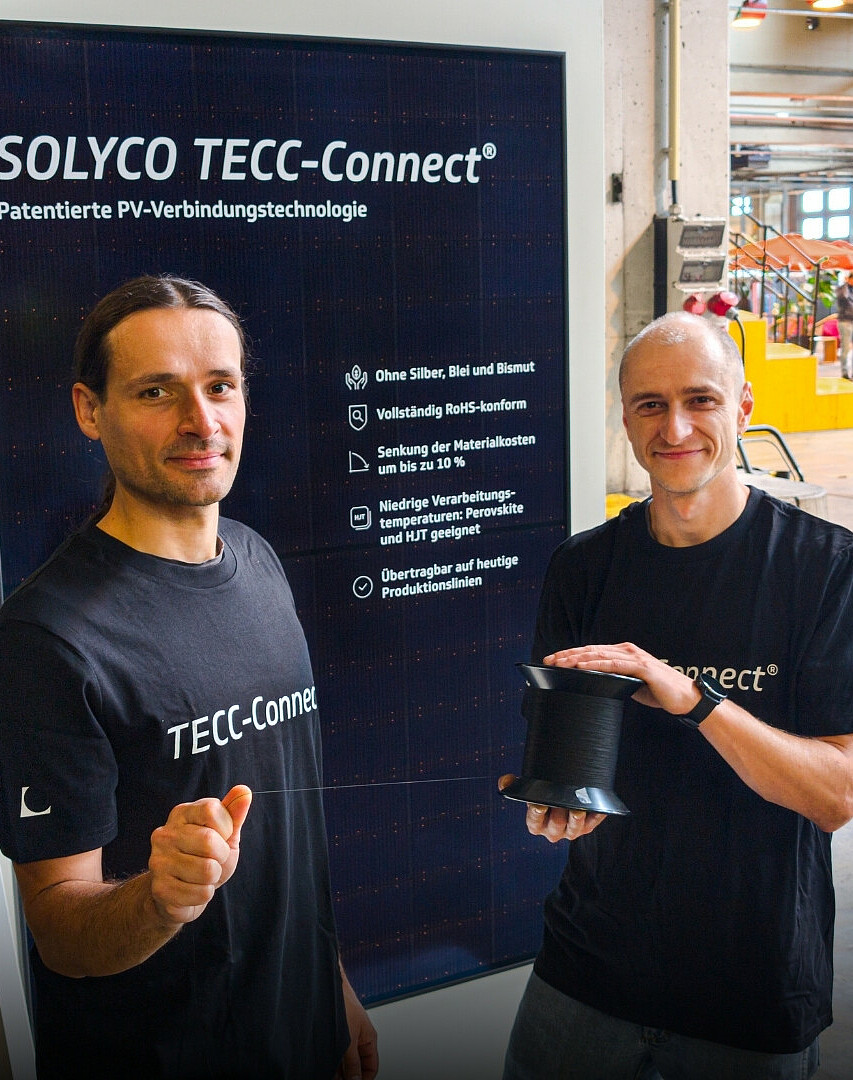
© TECC-Connect / SOLYCO
14.05.2026Deep tech startup SOLYCO TECC is making the solar industry cleaner

Since the 1990s, the solar industry has come a long way: from a niche technology to a global industry producing over a billion modules per year. Yet one problem has stubbornly persisted: solar panels marketed as a green technology still contain toxic heavy metals. Berlin-based startup SOLYCO TECC wants to change that.
The world's first clean interconnection technology for solar cells
SOLYCO TECC was founded in 2023 at the Urban Tech Republic on the site of the former Tegel Airport, one of Brain City Berlin's most dynamic innovation hubs. The team brings decades of industry experience: the founders previously worked at Solon, one of Berlin's best-known solar companies of the 2000s, which was at one point listed on the TecDAX. "It's really quite unglamorous engineering and materials science," says Dr Lars Podlowski about the heart of their work, with a certain irony, because the results of that understated engineering could fundamentally transform the global solar industry.
The product is called TECC-Connect®, the world's first completely silver-, lead- and bismuth-free interconnection technology for solar cells. Currently, the individual cells in a solar module are soldered together using wires that contain heavy metals. "The solar industry actually still has an exemption, because these heavy metals have long been banned in the rest of the electronics industry," explains Podlowski. SOLYCO TECC replaces soldering with a patented bonding process: a specially coated copper wire connects the solar cells electrically, without any critical raw materials.
From patent to series production
The idea grew out of years of hands-on experience in solar module production. Early experiments were kept deliberately small-scale until the patent was granted, and only then was the company officially founded. "Our entire development is based on our team bringing real technological expertise to the table," says Podlowski. "The foundation is that we are experts in solar module production and have been working on this for many years."
SOLYCO TECC has already signed a cooperation agreement with a major Chinese manufacturer, who has paid an advance licence fee. Series production is planned to begin later this year, with commercial sales, initially focused on the German market, starting in early 2027. The business model is built on licensing: "We believe it is interesting for the entire solar industry," says Podlowski. "We want to make the technology available to other companies globally."
Berlin as a base: talent and networks
In developing TECC-Connect®, SOLYCO TECC has worked closely with Berlin universities and universities of applied sciences, including HTW Berlin, BHT and TU Berlin. "We get really great students who want to write their thesis with us," says Podlowski. "It's a win-win situation." The Helmholtz-Zentrum Berlin, formerly the Hahn-Meitner-Institut, is also a cooperation partner.
The team values the Tegel location for its shared infrastructure and proximity to other innovative companies. SOLYCO TECC previously operated from the Motion Lab in Treptow, a co-working space for hardware developers. Asked what sets Berlin apart as a location for founders, Podlowski is candid: direct public support for startups is limited, but the advice available through Berlin Partner and the IBB is genuinely valuable. What the city clearly does offer is human capital: "We've had some really great people here who do outstanding work."
Deep tech that the world needs
SOLYCO TECC exemplifies what deep tech means in practice: patient, research-based materials science with global impact potential. "I think it's good that the deep tech campaign is shining a light on this. Right now, everyone is focused on digital business models and AI. But in the end, it always comes down to hardware," says Podlowski. "Software doesn't ultimately produce anything. We need materials science and engineering for a product to actually exist."
For Brain City Berlin, SOLYCO TECC is a vivid illustration of what emerges when long-standing expertise, a strong university network and an innovation-friendly environment come together: a technology that can not only make the solar industry cleaner, but also demonstrates that deep tech from Berlin has global relevance. It comes as no surprise, then, that the startup is among the finalists for the Deep Tech Award 2026.
Further reading:
More Stories
-
Startup Facts & Events Innovations
 © HU Berlin / Stefan Klenke
Startup Facts & Events InnovationsThe Berlin Battery Lab: Research into sodium-ion batteries.→
© HU Berlin / Stefan Klenke
Startup Facts & Events InnovationsThe Berlin Battery Lab: Research into sodium-ion batteries.→The Berlin Battery Lab: Research into sodium-ion batteries
-
Facts & Events Transfer – Stories Innovations
 © Mikhail Rudenko
Facts & Events Transfer – Stories InnovationsBerlin research moves closer to the diamond-based quantum internet.→
© Mikhail Rudenko
Facts & Events Transfer – Stories InnovationsBerlin research moves closer to the diamond-based quantum internet.→Berlin research moves closer to the diamond-based quantum internet
-
Transfer – Stories Innovations
 © Michael Radke, Max Delbrück Center
Transfer – Stories InnovationsHidden switch in the heart: Berlin research opens new avenues against heart disease.→
© Michael Radke, Max Delbrück Center
Transfer – Stories InnovationsHidden switch in the heart: Berlin research opens new avenues against heart disease.→Hidden switch in the heart: Berlin research opens new avenues against heart disease
-
Startup
 © Hydro-Berlin
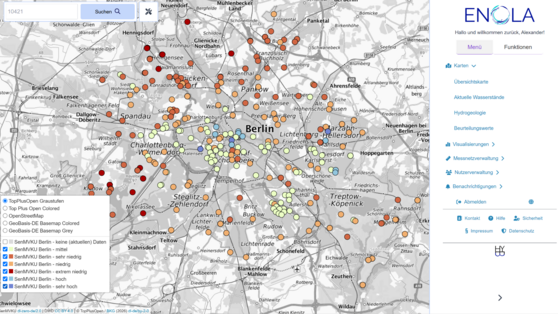
StartupWater in crisis: How Berlin research and a Berlin start-up are shaping the water management of the future.→
© Hydro-Berlin
StartupWater in crisis: How Berlin research and a Berlin start-up are shaping the water management of the future.→Water in crisis: How Berlin research and a Berlin start-up are shaping the water management of the future
-
Facts & Events Innovations
 © Qui Nguyen via Unsplash
Facts & Events InnovationsCorals under pressure: Charité researches the resilience of reefs.→
© Qui Nguyen via Unsplash
Facts & Events InnovationsCorals under pressure: Charité researches the resilience of reefs.→Corals under pressure: Charité researches the resilience of reefs
-
Transfer – Stories Innovations
 Transfer – Stories InnovationsBerlin gives deep tech a strategy: The Deep Tech Berlin Agenda has been adopted.→
Berlin gives deep tech a strategy: The Deep Tech Berlin Agenda has been adopted
-
Talent Innovations
 Talent InnovationsFalling Walls Lab 2026: Apply now and come to Berlin.→
Falling Walls Lab 2026: Apply now and come to Berlin
-
Talent Innovations
 © Essi Glomb / Weißensee Kunsthochschule Berlin
Talent InnovationsDesign meets technology: Hannah Friederike Fischer from DFKI Berlin in interview.→
© Essi Glomb / Weißensee Kunsthochschule Berlin
Talent InnovationsDesign meets technology: Hannah Friederike Fischer from DFKI Berlin in interview.→Design meets technology: Hannah Friederike Fischer from DFKI Berlin in interview
-
Transfer – Stories Innovations
 © PTB | Stephanie Rubrecht
Transfer – Stories InnovationsEarlier detection of mental illness: the Einstein Center for Youth Mental Health gets under way.→
© PTB | Stephanie Rubrecht
Transfer – Stories InnovationsEarlier detection of mental illness: the Einstein Center for Youth Mental Health gets under way.→Earlier detection of mental illness: the Einstein Center for Youth Mental Health gets under way
-
Startup
 © LiveEO
StartupSeeing risk from space: an interview with LiveEO.→
© LiveEO
StartupSeeing risk from space: an interview with LiveEO.→Seeing risk from space: an interview with LiveEO
-
Innovations
 © Pexels / Tara Winstead
InnovationsWhy does performance fluctuate so dramatically in ADHD? A Berlin researcher has a new answer.→
© Pexels / Tara Winstead
InnovationsWhy does performance fluctuate so dramatically in ADHD? A Berlin researcher has a new answer.→Why does performance fluctuate so dramatically in ADHD? A Berlin researcher has a new answer
-
Startup Facts & Events
 © Christoph Soeder / Deep Tech Berlin
Startup Facts & EventsDeep Tech Award 2026: The winners have been announced.→
© Christoph Soeder / Deep Tech Berlin
Startup Facts & EventsDeep Tech Award 2026: The winners have been announced.→Deep Tech Award 2026: The winners have been announced
-
Facts & Events Innovations
 © Berlin Partner
Facts & Events InnovationsThe finalists for the Deep Tech Award 2026 have been announced.→
© Berlin Partner
Facts & Events InnovationsThe finalists for the Deep Tech Award 2026 have been announced.→The finalists for the Deep Tech Award 2026 have been announced
-
Facts & Events Innovations
 © Freie Universität Berlin / Janet Wagner
Facts & Events InnovationsLiving Forest Laboratories in Berlin: It's Growing!→
© Freie Universität Berlin / Janet Wagner
Facts & Events InnovationsLiving Forest Laboratories in Berlin: It's Growing!→Living Forest Laboratories in Berlin: It's Growing!
-
Startup Facts & Events
 © Berlin Partner - eventfotografen.berlin
Startup Facts & EventsExcellence meets entrepreneurial spirit: Science & Startups strengthens Berlin’s position in Europe.→
© Berlin Partner - eventfotografen.berlin
Startup Facts & EventsExcellence meets entrepreneurial spirit: Science & Startups strengthens Berlin’s position in Europe.→Excellence meets entrepreneurial spirit: Science & Startups strengthens Berlin’s position in Europe
-
Startup Facts & Events
 Photo credit: © Samuel Stuart Hollenshead / NYU Photo Bureau
Startup Facts & EventsNew York University becomes a strategic partner university of Humboldt-Universität zu Berlin.→
Photo credit: © Samuel Stuart Hollenshead / NYU Photo Bureau
Startup Facts & EventsNew York University becomes a strategic partner university of Humboldt-Universität zu Berlin.→New York University becomes a strategic partner university of Humboldt-Universität zu Berlin
-
Startup Transfer – Stories
 © theion
Startup Transfer – StoriesThe start-up theion wants to revolutionise the battery market and accelerate the energy transition with a new technology in Brain City Berlin.→
© theion
Startup Transfer – StoriesThe start-up theion wants to revolutionise the battery market and accelerate the energy transition with a new technology in Brain City Berlin.→“Batteries made in Germany, made in Berlin”
-
Insights Innovations
 © Berlin Institute for Innovation
Insights Innovations“Innovation = Invention + Market Penetration” is the working formula of the Berlin Institute for Innovation. The team takes a scientifically sound…→
© Berlin Institute for Innovation
Insights Innovations“Innovation = Invention + Market Penetration” is the working formula of the Berlin Institute for Innovation. The team takes a scientifically sound…→The Research Manufactory
-
Startup Transfer – Stories
 © STOFF2/Kerstin Reisch
Startup Transfer – StoriesBerlin Start-up STOFF2 wants to bring the ‘Zinc Intermediate-step Electrolyser’ (ZZE) to market maturity and is working closely with the TU Berlin to…→
© STOFF2/Kerstin Reisch
Startup Transfer – StoriesBerlin Start-up STOFF2 wants to bring the ‘Zinc Intermediate-step Electrolyser’ (ZZE) to market maturity and is working closely with the TU Berlin to…→The small, subtle intermediate step
-
Insights Transfer – Stories Innovations
 © Berlin Partner
Insights Transfer – Stories InnovationsQuantum technology is considered to be the next big technological leap. The Brain City Berlin offers ideal conditions for this.→
© Berlin Partner
Insights Transfer – Stories InnovationsQuantum technology is considered to be the next big technological leap. The Brain City Berlin offers ideal conditions for this.→BERLIN QUANTUM: a new initiative for quantum technologies
-
Startup Transfer – Stories
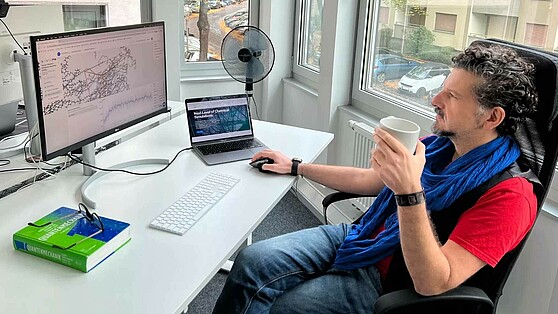 © Quantistry
Startup Transfer – StoriesThe Berlin start-up Quantistry makes chemical experiments in digital space possible with the help of Artificial Intelligence and quantum chemical…→
© Quantistry
Startup Transfer – StoriesThe Berlin start-up Quantistry makes chemical experiments in digital space possible with the help of Artificial Intelligence and quantum chemical…→The chemistry lab in the cloud
-
Facts & Events Innovations
 © Brand, Gao, Hamann, Martineck, Stangl/Charité
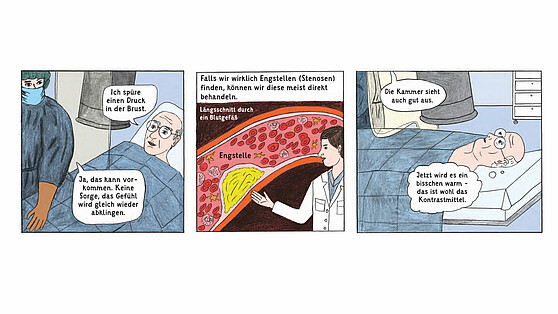
Facts & Events InnovationsThe Charité-Universitätsmedizin Berlin wants to inform patients with a comic before a heart catheter examination. As part of a study, the…→
© Brand, Gao, Hamann, Martineck, Stangl/Charité
Facts & Events InnovationsThe Charité-Universitätsmedizin Berlin wants to inform patients with a comic before a heart catheter examination. As part of a study, the…→A picture is worth a thousand words
-
Innovations
![[Translate to English:]](/fileadmin/_processed_/d/4/csm_shutterstock_jacob_lund_588x314_75e5e9bf67.jpg "[Translate to English:] Shutterstock/ Jacob Lund") [Translate to English:] Shutterstock/ Jacob Lund
InnovationsThe capital city fills almost half of the professorships with female scientists: 48 percent of the calls for professorships made by Berlin…→
[Translate to English:] Shutterstock/ Jacob Lund
InnovationsThe capital city fills almost half of the professorships with female scientists: 48 percent of the calls for professorships made by Berlin…→Brain City Berlin – pioneering in equality issues | 10.07.2019
-
Startup
![[Translate to English:]](/fileadmin/_processed_/4/4/csm_alvaro-reyes-unsplash_558x314_4d6fcfac3c.jpg "[Translate to English:] alvaro reyes on unsplash") [Translate to English:] alvaro reyes on unsplash
StartupOb Kniffelspiel oder Sudoku – Gehirntraining gibt es bereits seit Jahrzehnten. Das Berliner Start-up NeuroNation bietet es per Web oder App. Das…→
[Translate to English:] alvaro reyes on unsplash
StartupOb Kniffelspiel oder Sudoku – Gehirntraining gibt es bereits seit Jahrzehnten. Das Berliner Start-up NeuroNation bietet es per Web oder App. Das…→Fitness training for the brain | 21.05.2019