


-
© Pexels / Tara Winstead
28.05.2026Why does performance fluctuate so dramatically in ADHD? A Berlin researcher has a new answer

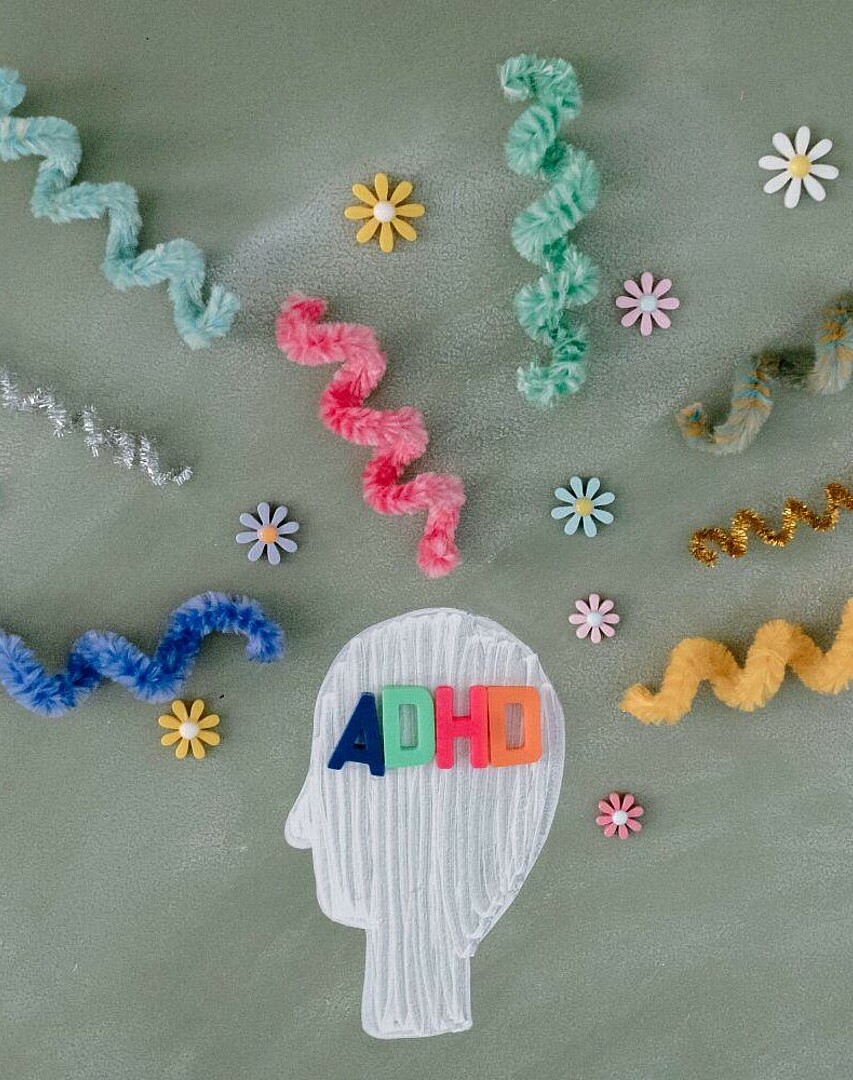
Many people with ADHD will recognise the pattern: hours of hyperfocus one moment, complete exhaustion at the next simple task. More and more people across Europe are receiving a diagnosis of attention deficit hyperactivity disorder (ADHD), with numbers rising particularly among women, even as understanding of the condition continues to improve. What remains unclear is why attention and performance fluctuate so markedly in those affected. A new study from Freie Universität at Brain City Berlin now offers a fresh explanation.
Mohammad Dawood Rahimi, a neurobiologist at FU Berlin, recently presented his model of "Energy Deficit Hyperactivity Disorder" (EDHD) in the prestigious journal Neuroscience & Biobehavioral Reviews. This approach reframes ADHD as a consequence of unstable neural energy availability. According to the model, people with ADHD do not fundamentally lack attention. Instead, they have an unstable, rapidly depleted mental energy. This dynamic could explain why those affected are able to work with intense concentration in some situations, whilst in others even simple tasks prove a struggle.
From attention deficit to energy regulation
The framework is intended to contribute to the destigmatisation of those with the condition. "The model sheds new light on a disorder studied for decades," says Mohammad Dawood Rahimi from the Cognitive Neuroscience Division at Freie Universität Berlin. Phenomena such as hyperfocus or dramatic swings in performance can be better understood through the EDHD model.
A commonly described feature of ADHD is the extreme variability in performance: many people with ADHD can concentrate intensely for hours on highly engaging tasks, yet face considerable difficulty with monotonous or prolonged ones. The EDHD model explains this as a result of energy regulation: stimulating tasks momentarily optimise the brain's energy allocation, whilst mundane tasks deplete limited reserves without providing the "arousal feedback" needed to maintain metabolic supply. Performance capacity is therefore contingent on the energetic context of the task.
In his study, the researcher argues that neurobiological processes such as glucose metabolism and mitochondrial function could play a central role. Certain brain regions, including those responsible for planning, attention, and self-regulation, may at times receive insufficient energy. Rahimi is also clear that: "EDHD is a theoretical framework, not a clinical diagnostic tool. The objective is to synthesise findings from neuroscience, mitochondrial biology, and computer modelling into a systemic framework that explains these neuro-energetic phenomena."
Rest and structure as key factors
Within the EDHD model, stable attention depends above all on sufficient recovery. Sleep, breaks, and biological rhythms determine how much cognitive energy is available. Without this regeneration, even simple tasks can become overwhelming – a possible explanation for the typical fluctuations in performance.
Behaviours such as restlessness or distractibility also appear in a different light through this framework: they could be compensatory strategies to stimulate arousal and stabilise energy levels. Movement or new stimuli help the brain to maintain its capacity. This shifts the understanding of ADHD away from questions of discipline and towards the management of biological resources. In practical terms, new avenues open up, such as a greater focus on sleep, nutrition, and metabolism alongside medication. The EDHD model is a step in this direction, and Brain City Berlin, with its strong neuroscience community, is likely to play an important role in taking it forward.
Further information
- The study: Rahimi, M. D. (2026). "Energy Deficit Hyperactivity Disorder (EDHD): A Neurobiological Energy Dysregulation Model for ADHD", published in Neuroscience & Biobehavioral Reviews, is available at: https://doi.org/10.1016/j.neubiorev.2026.106616
- Press release from FU Berlin: https://www.fu-berlin.de/en/presse/informationen/fup/2026/fup_26_051-ADHS-Erklaeransatz-EDHD-neuroscience/index.html
- Mohammad Dawood Rahimi, Freie Universität Berlin, Department of Education and Psychology, Cognitive Neuroscience Division, Email: rahim84@zedat.fu-berlin.de
More Stories
-
Startup Facts & Events Innovations
 © HU Berlin / Stefan Klenke
Startup Facts & Events InnovationsThe Berlin Battery Lab: Research into sodium-ion batteries.→
© HU Berlin / Stefan Klenke
Startup Facts & Events InnovationsThe Berlin Battery Lab: Research into sodium-ion batteries.→The Berlin Battery Lab: Research into sodium-ion batteries
-
Facts & Events Transfer – Stories Innovations
 © Mikhail Rudenko
Facts & Events Transfer – Stories InnovationsBerlin research moves closer to the diamond-based quantum internet.→
© Mikhail Rudenko
Facts & Events Transfer – Stories InnovationsBerlin research moves closer to the diamond-based quantum internet.→Berlin research moves closer to the diamond-based quantum internet
-
Transfer – Stories Innovations
 © Michael Radke, Max Delbrück Center
Transfer – Stories InnovationsHidden switch in the heart: Berlin research opens new avenues against heart disease.→
© Michael Radke, Max Delbrück Center
Transfer – Stories InnovationsHidden switch in the heart: Berlin research opens new avenues against heart disease.→Hidden switch in the heart: Berlin research opens new avenues against heart disease
-
Facts & Events Innovations
 © Qui Nguyen via Unsplash
Facts & Events InnovationsCorals under pressure: Charité researches the resilience of reefs.→
© Qui Nguyen via Unsplash
Facts & Events InnovationsCorals under pressure: Charité researches the resilience of reefs.→Corals under pressure: Charité researches the resilience of reefs
-
Transfer – Stories Innovations
 Transfer – Stories InnovationsBerlin gives deep tech a strategy: The Deep Tech Berlin Agenda has been adopted.→
Berlin gives deep tech a strategy: The Deep Tech Berlin Agenda has been adopted
-
Talent Innovations
 Talent InnovationsFalling Walls Lab 2026: Apply now and come to Berlin.→
Falling Walls Lab 2026: Apply now and come to Berlin
-
Talent Innovations
 © Essi Glomb / Weißensee Kunsthochschule Berlin
Talent InnovationsDesign meets technology: Hannah Friederike Fischer from DFKI Berlin in interview.→
© Essi Glomb / Weißensee Kunsthochschule Berlin
Talent InnovationsDesign meets technology: Hannah Friederike Fischer from DFKI Berlin in interview.→Design meets technology: Hannah Friederike Fischer from DFKI Berlin in interview
-
Transfer – Stories Innovations
 © PTB | Stephanie Rubrecht
Transfer – Stories InnovationsEarlier detection of mental illness: the Einstein Center for Youth Mental Health gets under way.→
© PTB | Stephanie Rubrecht
Transfer – Stories InnovationsEarlier detection of mental illness: the Einstein Center for Youth Mental Health gets under way.→Earlier detection of mental illness: the Einstein Center for Youth Mental Health gets under way
-
Startup Innovations
 © TECC-Connect / SOLYCO
Startup InnovationsDeep tech startup SOLYCO TECC is making the solar industry cleaner.→
© TECC-Connect / SOLYCO
Startup InnovationsDeep tech startup SOLYCO TECC is making the solar industry cleaner.→Deep tech startup SOLYCO TECC is making the solar industry cleaner
-
Facts & Events Innovations
 © Berlin Partner
Facts & Events InnovationsThe finalists for the Deep Tech Award 2026 have been announced.→
© Berlin Partner
Facts & Events InnovationsThe finalists for the Deep Tech Award 2026 have been announced.→The finalists for the Deep Tech Award 2026 have been announced
-
Facts & Events Innovations
 © Freie Universität Berlin / Janet Wagner
Facts & Events InnovationsLiving Forest Laboratories in Berlin: It's Growing!→
© Freie Universität Berlin / Janet Wagner
Facts & Events InnovationsLiving Forest Laboratories in Berlin: It's Growing!→Living Forest Laboratories in Berlin: It's Growing!
-
Insights Innovations
 © Berlin Institute for Innovation
Insights Innovations“Innovation = Invention + Market Penetration” is the working formula of the Berlin Institute for Innovation. The team takes a scientifically sound…→
© Berlin Institute for Innovation
Insights Innovations“Innovation = Invention + Market Penetration” is the working formula of the Berlin Institute for Innovation. The team takes a scientifically sound…→The Research Manufactory
-
Insights Transfer – Stories Innovations
 © Berlin Partner
Insights Transfer – Stories InnovationsQuantum technology is considered to be the next big technological leap. The Brain City Berlin offers ideal conditions for this.→
© Berlin Partner
Insights Transfer – Stories InnovationsQuantum technology is considered to be the next big technological leap. The Brain City Berlin offers ideal conditions for this.→BERLIN QUANTUM: a new initiative for quantum technologies
-
Facts & Events Innovations
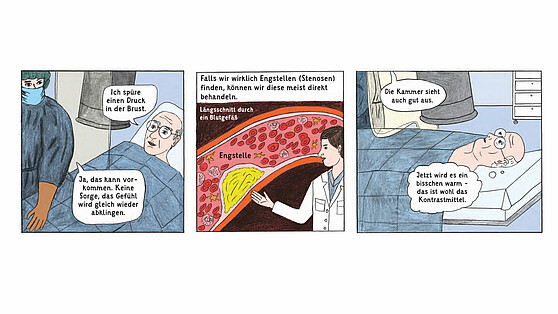 © Brand, Gao, Hamann, Martineck, Stangl/Charité
Facts & Events InnovationsThe Charité-Universitätsmedizin Berlin wants to inform patients with a comic before a heart catheter examination. As part of a study, the…→
© Brand, Gao, Hamann, Martineck, Stangl/Charité
Facts & Events InnovationsThe Charité-Universitätsmedizin Berlin wants to inform patients with a comic before a heart catheter examination. As part of a study, the…→A picture is worth a thousand words
-
Innovations
![[Translate to English:]](/fileadmin/_processed_/d/4/csm_shutterstock_jacob_lund_588x314_75e5e9bf67.jpg "[Translate to English:] Shutterstock/ Jacob Lund") [Translate to English:] Shutterstock/ Jacob Lund
InnovationsThe capital city fills almost half of the professorships with female scientists: 48 percent of the calls for professorships made by Berlin…→
[Translate to English:] Shutterstock/ Jacob Lund
InnovationsThe capital city fills almost half of the professorships with female scientists: 48 percent of the calls for professorships made by Berlin…→Brain City Berlin – pioneering in equality issues | 10.07.2019