


-
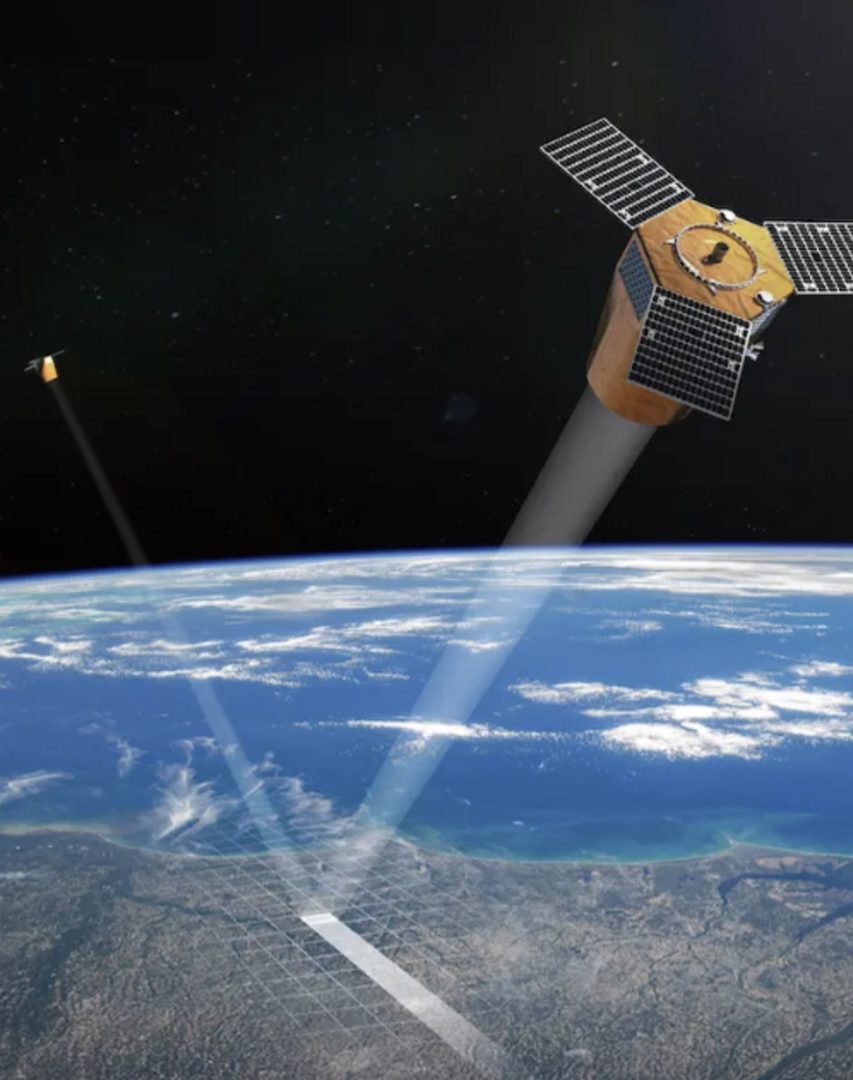
© LiveEO
25.06.2026Seeing risk from space: an interview with LiveEO

The Berlin-based startup LiveEO uses artificial intelligence to analyse satellite data and monitor critical infrastructure. This allows network operators such as Deutsche Bahn and E.ON to identify risks from vegetation or climate-related damage at an early stage, and to check supply chains. The company is also active in satellite production. In our interview with LiveEO Marketing Director Patrick Hollenbeck, we asked how they use deep tech and why Brain City Berlin is the right environment for this work.
1. What exactly does LiveEO do, and what potential does this technology have?
We make certain risks to critical infrastructure visible from space. LiveEO analyses high-resolution satellite data using its own AI and translates it into concrete recommendations for operators of electricity, rail and pipeline networks, as well as for supply chains. Our three products cover the most important use cases: Treeline monitors vegetation along power lines and railway routes to prevent outages and wildfires; Surface Scout detects changes such as unauthorised construction work along pipelines; and TradeAware helps companies comply with the EU Deforestation Regulation (EUDR).
The potential is enormous, because the world is full of infrastructure that is still inspected manually, on fixed cycles, and often by helicopter or on foot: expensive, slow and full of gaps. We replace that with continuous, comprehensive monitoring: not the condition at the last inspection, but where the risk lies right now. In the electricity grid alone, we monitor over one million kilometres of lines. Scaled across all networks worldwide, electricity, rail, pipelines, telecoms, this is a multi-billion euro market.
2. Who is already using your product, and where is your biggest market?
Our customers include Deutsche Bahn, E.ON and American Electric Power, the largest transmission network operator in the United States. Overall, we are active on five continents and monitor hundreds of thousands of kilometres of linear infrastructure.
Our strongest markets are currently Europe, with the DACH region as our home base, and North America, where utility companies in particular are investing heavily in vegetation management and wildfire protection.
3. Congratulations on your Deep Tech Award nomination! Can you explain more about how deep tech features in your product?
Thank you! Deep tech is present in what we do on several levels. First, the AI: we develop our own machine learning models that derive information from stereo satellite imagery that the human eye simply cannot see, such as the height of individual trees to sub-metre precision, their vitality, or millimetre-accurate ground movement via InSAR radar.
Second, and this is the most exciting step, we are building our own satellite constellation called Twinspector. We are investing a double-digit million sum to launch two satellites by 2028, equipped with the largest commercial 3D camera in orbit.
What makes it special: with multiple GPUs on board, the AI processes data directly in space. The constellation can measure the height of 1.1 million trees to around one metre accuracy in less than a second. This is deep tech in the truest sense: hardware, optics and AI working together to achieve something that has simply never existed before. The mission is being built along a German and European value chain with partners including Reflex Aerospace, Engineering Minds Munich and KTO, and is supported in part through the ESA InCubed programme.
4. How did the company come about, and how did the Berlin environment contribute? Have you worked with Berlin research institutions or universities?
LiveEO was founded by Sven Przywarra and Daniel Seidel, both driven by a passion for space and science fiction. Sven studied industrial engineering at TU Berlin, Daniel aerospace engineering at RWTH Aachen. They met at a space industry trade fair, and it took only a few months to arrive at their first business idea: using satellite data to automatically detect infrastructure such as rail lines and pipelines, and to help companies make better decisions.
The Berlin environment was decisive from the start. Through the university entrepreneurship ecosystem, specifically the Center for Entrepreneurship at TU Berlin, we got our first office space and support applying for an EXIST start-up grant. It is a textbook example of how German research funding and the academic environment can make a deep tech spin-off possible in the first place.
5. Why do you enjoy working in Berlin, how does the city support you, and how do you finance yourselves?
Berlin brings together two things that rarely go hand in hand: a strong space and research ecosystem, with TU Berlin, proximity to the DLR and a growing new space scene, and an international talent pool. We are now a team of over 160 people, around half of them in Berlin, from more than 30 nations. That kind of diversity is something you can attract in a city like Berlin. Programmes such as the Deep Tech Award and Berlin's broader funding landscape also help deep tech companies gain visibility and build connections.
We have financed ourselves through a combination of venture capital and public research funding. In total, more than 60 million US dollars have been invested in the company. Most recently, in May 2026, we closed a round of 28 million euros, with the German VC Helantic as a new investor. This capital is going into expanding our offering and developing new products for the defence and security sector, alongside support such as the ESA InCubed programme for our Twinspector mission.
6. What challenges have you faced?
The biggest challenge, then and now, is translating a genuinely deep technology into a reliable, scalable commercial service. Turning raw data from space into robust, audit-ready insights that a network operator can base their maintenance planning on: that requires years of model development and close collaboration with customers.
And then there is arguably the boldest step: the decision to build our own satellite constellation rather than simply buying in data from others. Hardware in space, optics, on-board AI and a financing volume in the double-digit millions: it is capital-intensive and technically demanding. Particularly in Germany, where venture capital for hardware-heavy deep tech is scarcer than in the software space, that is a real challenge.
7. What advice would you give to other startups wanting to get started in Berlin?
First: use the ecosystem consistently. University entrepreneurship centres, EXIST, ESA programmes and Berlin's funding landscape are genuine accelerators, especially in the early days when every euro and every square metre of office space counts.
Second: find real customers with real problems early on, not just pilot projects. Deep tech only proves its worth when it concretely saves someone money or reduces their risk.
And third: be patient and be willing to commit to hardware. Deep tech hardware requires more stamina than pure software, but that depth is precisely what becomes your competitive moat down the line.
8. What are your plans for the next few years?
The central focus is the launch of our own Twinspector constellation: two satellites by 2028, which will transform us from a data analytics company into a vertically integrated provider controlling the entire chain from the sensor in space to the actionable recommendation. In parallel, we are continuing to scale our three products internationally, above all in North America, Australia and Europe, while building out the new defence and security area.
More Stories
-
Startup Facts & Events Innovations
 © HU Berlin / Stefan Klenke
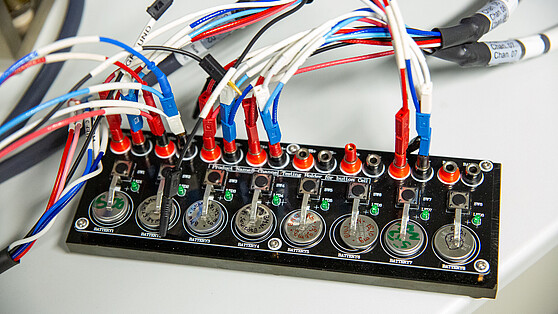
Startup Facts & Events InnovationsThe Berlin Battery Lab: Research into sodium-ion batteries.→
© HU Berlin / Stefan Klenke
Startup Facts & Events InnovationsThe Berlin Battery Lab: Research into sodium-ion batteries.→The Berlin Battery Lab: Research into sodium-ion batteries
-
Startup
 © Hydro-Berlin
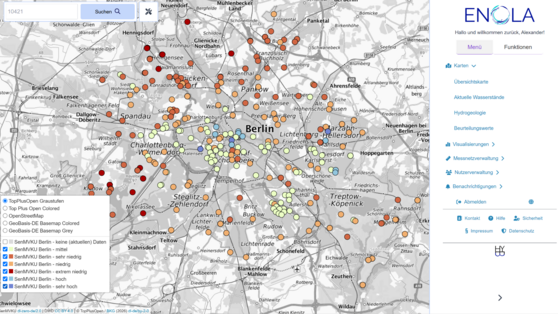
StartupWater in crisis: How Berlin research and a Berlin start-up are shaping the water management of the future.→
© Hydro-Berlin
StartupWater in crisis: How Berlin research and a Berlin start-up are shaping the water management of the future.→Water in crisis: How Berlin research and a Berlin start-up are shaping the water management of the future
-
Startup Facts & Events
 © Christoph Soeder / Deep Tech Berlin
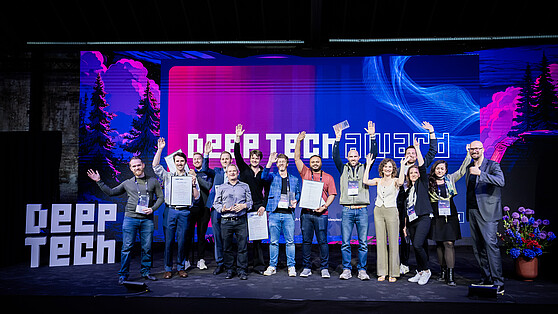
Startup Facts & EventsDeep Tech Award 2026: The winners have been announced.→
© Christoph Soeder / Deep Tech Berlin
Startup Facts & EventsDeep Tech Award 2026: The winners have been announced.→Deep Tech Award 2026: The winners have been announced
-
Startup Innovations
 © TECC-Connect / SOLYCO
Startup InnovationsDeep tech startup SOLYCO TECC is making the solar industry cleaner.→
© TECC-Connect / SOLYCO
Startup InnovationsDeep tech startup SOLYCO TECC is making the solar industry cleaner.→Deep tech startup SOLYCO TECC is making the solar industry cleaner
-
Startup Facts & Events
 © Berlin Partner - eventfotografen.berlin
Startup Facts & EventsExcellence meets entrepreneurial spirit: Science & Startups strengthens Berlin’s position in Europe.→
© Berlin Partner - eventfotografen.berlin
Startup Facts & EventsExcellence meets entrepreneurial spirit: Science & Startups strengthens Berlin’s position in Europe.→Excellence meets entrepreneurial spirit: Science & Startups strengthens Berlin’s position in Europe
-
Startup Facts & Events
 Photo credit: © Samuel Stuart Hollenshead / NYU Photo Bureau
Startup Facts & EventsNew York University becomes a strategic partner university of Humboldt-Universität zu Berlin.→
Photo credit: © Samuel Stuart Hollenshead / NYU Photo Bureau
Startup Facts & EventsNew York University becomes a strategic partner university of Humboldt-Universität zu Berlin.→New York University becomes a strategic partner university of Humboldt-Universität zu Berlin
-
Startup Transfer – Stories
 © theion
Startup Transfer – StoriesThe start-up theion wants to revolutionise the battery market and accelerate the energy transition with a new technology in Brain City Berlin.→
© theion
Startup Transfer – StoriesThe start-up theion wants to revolutionise the battery market and accelerate the energy transition with a new technology in Brain City Berlin.→“Batteries made in Germany, made in Berlin”
-
Startup Transfer – Stories
 © STOFF2/Kerstin Reisch
Startup Transfer – StoriesBerlin Start-up STOFF2 wants to bring the ‘Zinc Intermediate-step Electrolyser’ (ZZE) to market maturity and is working closely with the TU Berlin to…→
© STOFF2/Kerstin Reisch
Startup Transfer – StoriesBerlin Start-up STOFF2 wants to bring the ‘Zinc Intermediate-step Electrolyser’ (ZZE) to market maturity and is working closely with the TU Berlin to…→The small, subtle intermediate step
-
Startup Transfer – Stories
 © Quantistry
Startup Transfer – StoriesThe Berlin start-up Quantistry makes chemical experiments in digital space possible with the help of Artificial Intelligence and quantum chemical…→
© Quantistry
Startup Transfer – StoriesThe Berlin start-up Quantistry makes chemical experiments in digital space possible with the help of Artificial Intelligence and quantum chemical…→The chemistry lab in the cloud
-
Startup
![[Translate to English:]](/fileadmin/_processed_/4/4/csm_alvaro-reyes-unsplash_558x314_4d6fcfac3c.jpg "[Translate to English:] alvaro reyes on unsplash") [Translate to English:] alvaro reyes on unsplash
StartupOb Kniffelspiel oder Sudoku – Gehirntraining gibt es bereits seit Jahrzehnten. Das Berliner Start-up NeuroNation bietet es per Web oder App. Das…→
[Translate to English:] alvaro reyes on unsplash
StartupOb Kniffelspiel oder Sudoku – Gehirntraining gibt es bereits seit Jahrzehnten. Das Berliner Start-up NeuroNation bietet es per Web oder App. Das…→Fitness training for the brain | 21.05.2019