


-
© Hydro-Berlin
24.08.2026Water in crisis: How Berlin research and a Berlin start-up are shaping the water management of the future

The summer of 2026 has made it clear: water is no longer a given in Berlin and Brandenburg. In July, the Spree ran dangerously low once again, while at the same time heavy rainfall events pushed the drainage system to its limits. Too much, too little, in the wrong place: the water management challenges facing the region are growing more complex. Researchers and a young start-up are working on answers in and for Brain City Berlin.
Water shortage and flooding: Two sides of the same coin
For three years, a research team from TU Berlin studied the approximately 3,500 square kilometre catchment area of the lower Spree between the Spreewald and Berlin, together with other institutions. The conclusion is unambiguous: "The water crisis is already a reality. Our results show that a fundamental shift in regional water management is necessary, away from rapid drainage and towards active storage and retention of water," says Irina Engelhardt, head of the Hydrogeology department at TU Berlin and project coordinator, in a press release from 30 June 2026. The project has produced a digital water storage toolbox for water suppliers, authorities and municipalities, as well as a regional drought early warning system based on high-resolution climate projections and hydrological models.
The Leibniz Institute of Freshwater Ecology and Inland Fisheries (IGB) in Berlin is also conducting intensive research on the water question, and its findings make for uncomfortable reading: ecological flood protection through the restoration of river floodplains is sensible, technically feasible and economically efficient. And yet this approach is rarely implemented consistently, because administrative and legal hurdles are too high. IGB researchers therefore recommend that policymakers and authorities prioritise ecological flood protection and make the necessary land available. Doing so would not only reduce flood risks, but also help achieve national and European environmental targets.
Groundwater data as a foundation: The start-up Hydro-Berlin
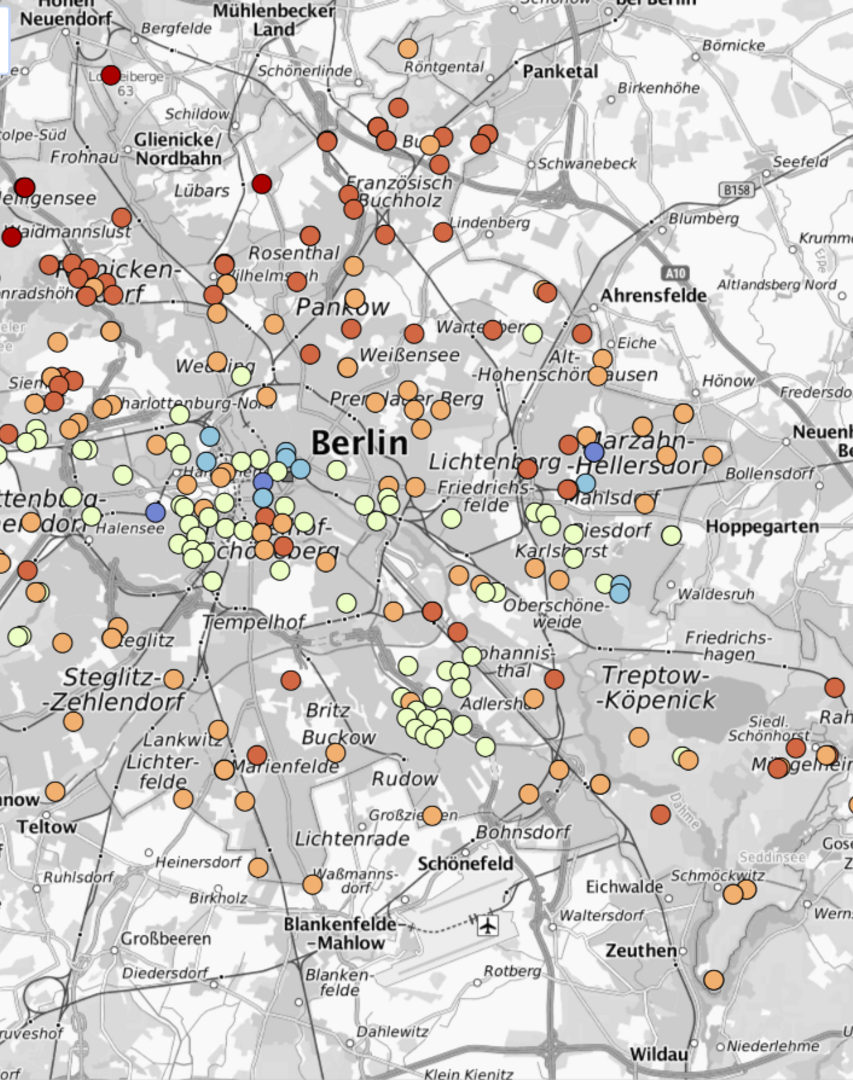
Anyone who wants to manage water must first understand it. That is precisely where Hydro-Berlin comes in, a Berlin-based start-up founded in 2024 as a spin-off from TU Berlin. Founders Judith Confal, Paul Knöll, Alexander Strom and their team spent years in scientific and practical work observing a problem that kept recurring: groundwater data exists in abundance, but it is fragmented, difficult to access and stored in separate systems. "It was precisely this situation that led us to found the company and develop our monitoring platform ENOLA," says Strom.
ENOLA allows different stakeholders to work with the same groundwater data simultaneously. What may sound straightforward is in practice a significant step forward: "In practice, data has to be exchanged regularly between engineering firms, water suppliers and the authorities. The data formats are very heterogeneous, but ultimately have to be brought back together to be analysed jointly. We are talking about hundreds of actors per federal state who should in principle all be feeding into a shared data pool." The team is currently working on exactly such a project for a state authority. What today still requires months of manual effort is set to be automated in future through shared interfaces and standardised data formats.
The data fed into ENOLA comes from groundwater monitoring wells: pipes inserted vertically into the ground through which groundwater can enter. Water levels are recorded either manually or via pressure probes and built-in modems, while quality samples are pumped out, bottled and sent to the laboratory. The platform consolidates this information and helps to rapidly verify the plausibility of incoming data. "This strengthens the capacity of our hydrogeologists," explains Strom.
Berlin as a test bed and growth location
It is no coincidence that Hydro-Berlin carries the city's name. The collaboration with Berlin's Senate administration is already under way: ENOLA is being used to accelerate the plausibility-checking routines for daily incoming groundwater level data, and is being piloted and validated by the Berlin State Geology Office. For the region's challenging balancing act between water scarcity and heavy rainfall events, Strom sees ENOLA as an important tool: "For the water management of the future, we need reliable data from which we can derive information on water availability and quality. That data needs an efficient infrastructure and people to verify it before it feeds into any model."
In direct connection with flooding, ENOLA can help investigate how groundwater, rivers, lakes and soil respond to flood events and what protective measures can be derived from that understanding. Monitoring groundwater levels between residential areas and retention basins to prevent flooded basements is another concrete application.
For the company itself, Brain City Berlin offers ideal conditions: the close connection to research through the TU Berlin spin-off, the Berlin Start-up Scholarship from Science & Startups, mentoring by Prof. Tomas Fernandez-Steeger, and a dense network of contacts including the KWB Kompetenzzentrum Wasser Berlin and the GFZ German Research Centre for Geosciences in Potsdam. The team is also actively involved in standardisation work: as a consortium member of the DIN SPEC group "Digital Systems in the Water Sector", Hydro-Berlin is contributing to the standardisation of water data, which is a prerequisite for all further progress.
Further reading:


More Stories
-
Startup Facts & Events Innovations
 © HU Berlin / Stefan Klenke
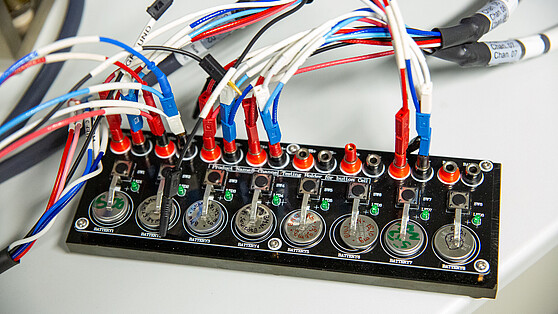
Startup Facts & Events InnovationsThe Berlin Battery Lab: Research into sodium-ion batteries.→
© HU Berlin / Stefan Klenke
Startup Facts & Events InnovationsThe Berlin Battery Lab: Research into sodium-ion batteries.→The Berlin Battery Lab: Research into sodium-ion batteries
-
Startup
 © LiveEO
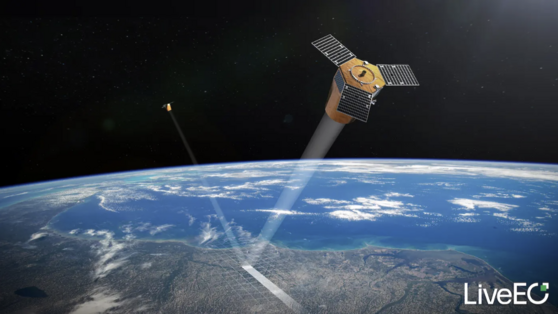
StartupSeeing risk from space: an interview with LiveEO.→
© LiveEO
StartupSeeing risk from space: an interview with LiveEO.→Seeing risk from space: an interview with LiveEO
-
Startup Facts & Events
 © Christoph Soeder / Deep Tech Berlin
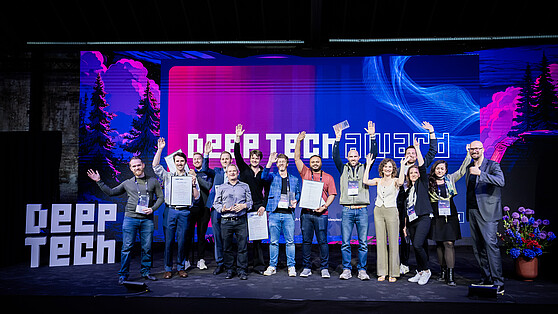
Startup Facts & EventsDeep Tech Award 2026: The winners have been announced.→
© Christoph Soeder / Deep Tech Berlin
Startup Facts & EventsDeep Tech Award 2026: The winners have been announced.→Deep Tech Award 2026: The winners have been announced
-
Startup Innovations
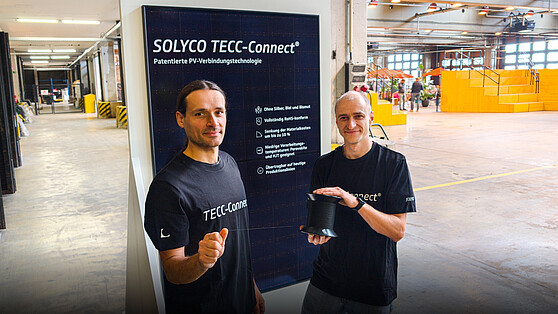 © TECC-Connect / SOLYCO
Startup InnovationsDeep tech startup SOLYCO TECC is making the solar industry cleaner.→
© TECC-Connect / SOLYCO
Startup InnovationsDeep tech startup SOLYCO TECC is making the solar industry cleaner.→Deep tech startup SOLYCO TECC is making the solar industry cleaner
-
Startup Facts & Events
 © Berlin Partner - eventfotografen.berlin
Startup Facts & EventsExcellence meets entrepreneurial spirit: Science & Startups strengthens Berlin’s position in Europe.→
© Berlin Partner - eventfotografen.berlin
Startup Facts & EventsExcellence meets entrepreneurial spirit: Science & Startups strengthens Berlin’s position in Europe.→Excellence meets entrepreneurial spirit: Science & Startups strengthens Berlin’s position in Europe
-
Startup Facts & Events
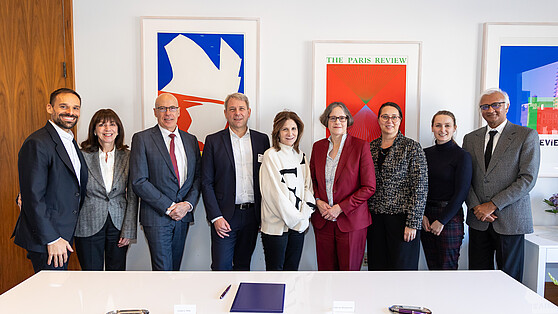 Photo credit: © Samuel Stuart Hollenshead / NYU Photo Bureau
Startup Facts & EventsNew York University becomes a strategic partner university of Humboldt-Universität zu Berlin.→
Photo credit: © Samuel Stuart Hollenshead / NYU Photo Bureau
Startup Facts & EventsNew York University becomes a strategic partner university of Humboldt-Universität zu Berlin.→New York University becomes a strategic partner university of Humboldt-Universität zu Berlin
-
Startup Transfer – Stories
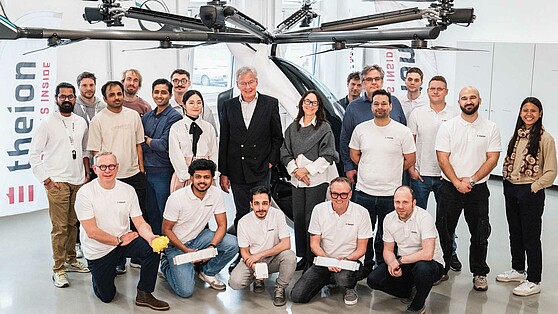 © theion
Startup Transfer – StoriesThe start-up theion wants to revolutionise the battery market and accelerate the energy transition with a new technology in Brain City Berlin.→
© theion
Startup Transfer – StoriesThe start-up theion wants to revolutionise the battery market and accelerate the energy transition with a new technology in Brain City Berlin.→“Batteries made in Germany, made in Berlin”
-
Startup Transfer – Stories
 © STOFF2/Kerstin Reisch
Startup Transfer – StoriesBerlin Start-up STOFF2 wants to bring the ‘Zinc Intermediate-step Electrolyser’ (ZZE) to market maturity and is working closely with the TU Berlin to…→
© STOFF2/Kerstin Reisch
Startup Transfer – StoriesBerlin Start-up STOFF2 wants to bring the ‘Zinc Intermediate-step Electrolyser’ (ZZE) to market maturity and is working closely with the TU Berlin to…→The small, subtle intermediate step
-
Startup Transfer – Stories
 © Quantistry
Startup Transfer – StoriesThe Berlin start-up Quantistry makes chemical experiments in digital space possible with the help of Artificial Intelligence and quantum chemical…→
© Quantistry
Startup Transfer – StoriesThe Berlin start-up Quantistry makes chemical experiments in digital space possible with the help of Artificial Intelligence and quantum chemical…→The chemistry lab in the cloud
-
Startup
![[Translate to English:]](/fileadmin/_processed_/4/4/csm_alvaro-reyes-unsplash_558x314_4d6fcfac3c.jpg "[Translate to English:] alvaro reyes on unsplash") [Translate to English:] alvaro reyes on unsplash
StartupOb Kniffelspiel oder Sudoku – Gehirntraining gibt es bereits seit Jahrzehnten. Das Berliner Start-up NeuroNation bietet es per Web oder App. Das…→
[Translate to English:] alvaro reyes on unsplash
StartupOb Kniffelspiel oder Sudoku – Gehirntraining gibt es bereits seit Jahrzehnten. Das Berliner Start-up NeuroNation bietet es per Web oder App. Das…→Fitness training for the brain | 21.05.2019