
- Transfer – Stories
- Facts & Events
When rain washes in dirt: New online tool from TU Berlin shows where it comes from
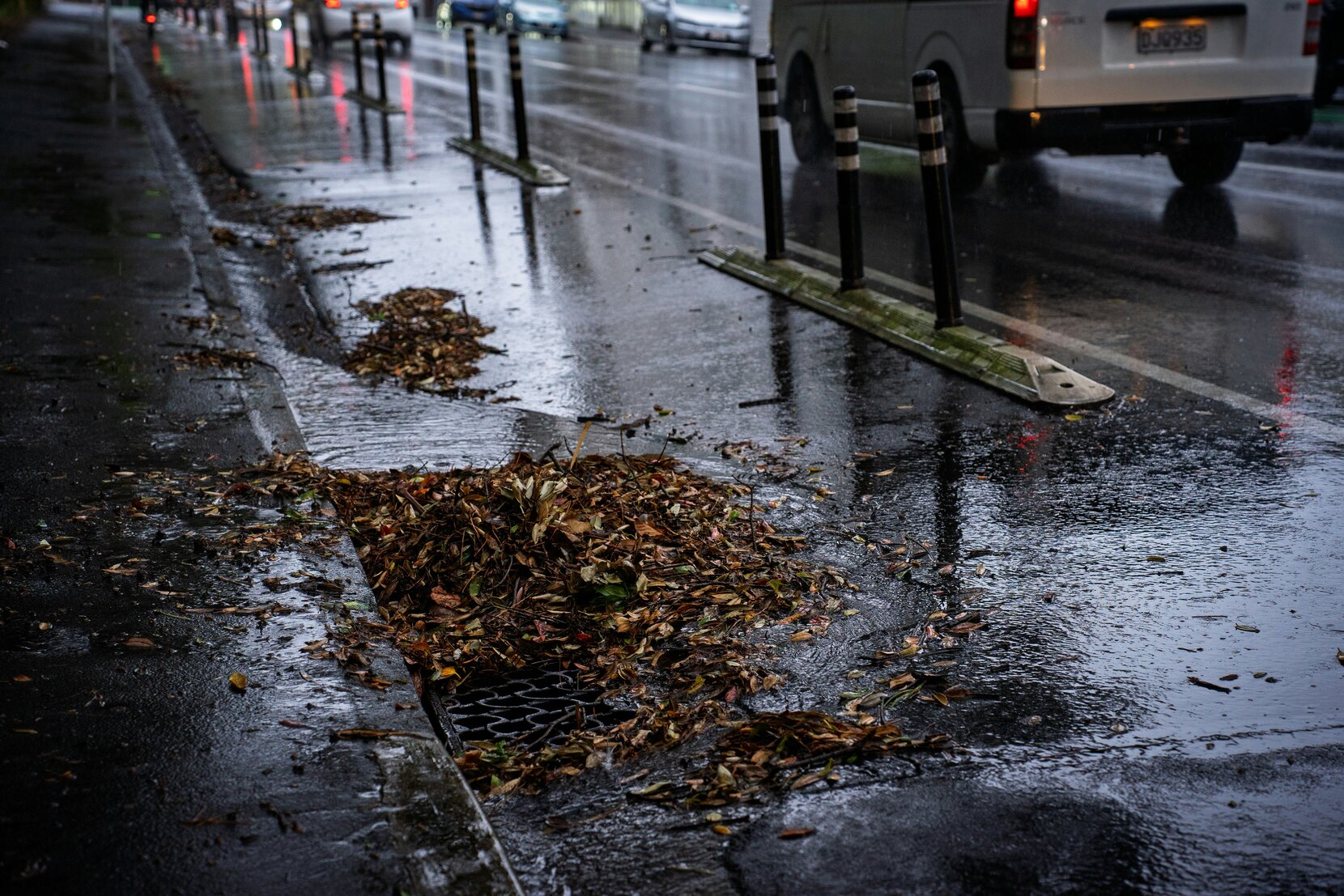
During heavy rainfall, water washes pollutants from streets, roofs and squares into rivers and lakes, but not in equal amounts everywhere. Researchers at Technische Universität Berlin have developed a freely available online tool that shows which areas of a city release particularly polluted rainwater and where comparatively clean water can be collected. CleanCityCover is designed to help cities plan countermeasures more effectively. Among other places, it has been tested in Brain City Berlin.
The problem is barely visible in everyday life: every downpour carries away whatever has accumulated on sealed surfaces. This includes microplastics from tire wear, oil residues from traffic, heavy metals from metal roofs and dirt from the air. Through the sewer system, all of this ends up in rivers and lakes, either directly or mixed with household wastewater, depending on the system. Because the pollution doesn’t come from a single source but from countless small ones, researchers call it “diffuse pollution.” Across Europe, it is considered one of the main pressures on urban rivers and lakes.
Climate change is making the issue more urgent, as heavy rainfall is becoming more frequent. Cities therefore face the question of where they should retain, treat or use rainwater.
A map of pollution sources
CleanCityCover was developed by the Ecohydrology department at TU Berlin. It was created by doctoral researcher Boney Joseph and Prof. Eva Paton together with visiting researcher Dr. Nasrin Haacke as part of the EU project WATERUN, which involves 14 European partners.
The tool assesses urban surfaces according to how polluted the rainwater that runs off them is. This reveals places where particularly large amounts of pollutants accumulate. At the same time, it shows areas where runoff is comparatively clean and may be suitable for reuse, for example for irrigation. A ranking of pollution sources supports the planning of what is known as blue-green infrastructure: green spaces, swales or ponds that absorb, store and allow rainwater to seep into the ground.
“Our goal was to develop a practical tool that can be transferred to other EU cities,” says Prof. Eva Paton, according to a TU Berlin press release. “CleanCityCover helps cities better understand where diffuse pollution originates and where measures can have the greatest impact.” The tool is intended to help municipalities, environmental agencies, water utilities and drainage companies plan targeted measures.
Tested in Berlin, Aarhus and Santiago de Compostela
As part of the project, CleanCityCover was adapted to and used in three cities: Aarhus in Denmark, Santiago de Compostela in Spain, and Berlin. So far, it covers three types of pollution: deposits from the air, pollution from road traffic and heavy metals from metal roofs.
Preliminary studies for Berlin produced a surprising finding: it is not necessarily the most severe storms that pollute rivers the most. Even weaker heavy rainfall can significantly reduce water quality if it follows a longer dry spell. By then, a particularly large amount of dirt has built up on surfaces, and the rain washes it all away at once. The tool therefore explicitly takes this combination of drought and heavy rain into account.
A related study by student Luz von der Groeben shows how widespread a single source of pollution can be. She analyzed Berlin Fire Department call-outs for oil spills on public roads and also counted oil stains on selected streets and parking lots in Kreuzberg. The result: oil pollution is widespread. It can damage road surfaces and harm aquatic life. The researchers therefore see a need to better record such pollution and prevent it from reaching rivers and lakes.
A basis for Berlin’s climate adaptation
For Brain City Berlin, the tool comes at the right time. Berlin’s Climate Adaptation Act requires the city to prepare for heat, drought and heavy rainfall, including through more urban greenery and by allowing more rainwater to seep into the ground or be reused. This requires precise information about where each measure makes sense. Because the method can be transferred to other cities, CleanCityCover is also available to municipalities across Europe. The tool, reference manual and user guide are freely available via the TU Berlin repository.
Further information
CleanCityCover in the TU Berlin repository
Study: Joseph, B., Alencar, P., Paton, E. (2026), Ecohydrology, https://doi.org/10.1002/eco.70248
EU project WATERUN: https://www.waterun.eu/